Showing posts with label Overfishing. Show all posts

Thursday, April 5, 2012

Dying Corals -- Milestones Along a Meandering Path to Famine

For Tim McClanahan, a zoologist studying fisheries, what happened in Kenya during the spring of 1998 was a wake-up call.

Between March and July of that year, a rare climatological double whammy sent ocean temperatures spiking 1 to 2 degrees Celsius above the normal range for spring and summer. An unusually intense El NiƱo weather pattern coincided with the warm phase of another cyclical area weather event.

This turned out to be a slow-motion disaster. Half the corals in the region bleached and died that year. Some had a 90 percent loss. "The bleaching and mortality event took about six months to fully unfold, but many of the reefs have not recovered even today -- 14 years after the event," said McClanahan, an employee of the Wildlife Conservation Society. He has spent more than 20 years working along Kenya's southeastern coast.

It took four years before scientists could definitively show dramatic declines in three commonly caught species of food fish. The lag and the devastating results got McClanahan thinking about climate change's potential to damage the economies of communities that traditionally rely on fish to eat and fish to sell.

He's not alone in pondering the fate of the world's fisheries in a changing climate, and how the fortunes of fish will affect the lives and livelihoods of more than 1.5 billion people who depend on seafood for at least a fifth of the animal protein they consume.

"This is an area that is pretty seriously underresearched, I think," said Edward Allison, a senior fellow at the University of East Anglia's School of International Development. "The rest of agriculture sometimes forgets fisheries, and the fisheries sector has been a little slower than others to realize the potential seriousness of climate change impacts."

Already, there is evidence that as the ocean warms, many commercial fish stocks are moving poleward in search of cooler waters. Rising ocean temperatures have triggered coral bleaching events that have caused widespread damage to the world's reefs, which serve as a habitat for many species.


A case of 'double jeopardy' for Africa and Asia


Researchers are also concerned about the effects that shifting ocean chemistry will have on marine ecosystems. As the world's carbon dioxide output has risen, oceans have absorbed more and more of the heat-trapping gas, leaving seawater 30 percent more acidic than it was before the Industrial Revolution began.

Eventually, ocean acidification could scramble ocean ecosystems by making it harder for sea creatures like oysters, coral and plankton to grow the hard, chalky shells that protect them from predators.

But experts say the consequences of those changes for fisheries are uncertain, though many believe that climate change will ultimately separate fish species, fisheries and the human communities that depend on them into winners and losers.

A crop of recent studies is just beginning to figure out who those winners and losers might be.

When researchers at the Malaysia-based WorldFish Center tried to rank countries by the vulnerability of their fisheries to climate change, Gambia topped the list -- and all but two of the top 10 nations were African, hailing from a continent where fish accounts for half the animal protein consumed each day and often provides significant income.

For many countries in Africa, climate change amounts to "double jeopardy," threatening food supplied by land and sea, said Allison, who led the WorldFish Center analysis.

Countries like Sierra Leone, Niger and the Democratic Republic of the Congo already face "extremely alarming" levels of hunger, according to the International Food Policy Research Institute. With climate change expected to decrease yields of staple crops like rain-fed maize and irrigated rice up to 20 percent by 2050, loss of fisheries catch as well could prove devastating.

Research suggests that many countries in Southeast Asia face similar risks. Altogether, 400 million people in Africa and Southeast Asia rely on fish and other marine foods like seaweed to provide half their essential protein and minerals.

Rashid Sumaila, a fisheries economist at the University of British Columbia, said "rough estimates" at modeling the effect of climate change on the world's fisheries suggest catches in the tropics could decline 40 percent by 2055 due to a panoply of factors including warming waters and ocean acidification.

Existing problems like overfishing complicate the picture, making it more difficult to project the effects of climate change.


Like losing 10M bulls every year


"If you have a fishery that is already badly managed, so stocks are not in good shape, and you add another stressor like climate change heating it -- well, then it just goes," said Sumaila.

Eighty-four percent of the world's fish stocks are fully exploited, overexploited or depleted, according to the U.N. Food and Agriculture Organization (FAO).

That overfishing takes an astounding toll on the world economy, ecosystems and food security in areas that rely on fisheries as a cheap and reliable source of food.

When the World Bank recently tried to tally the economic cost of overfishing, poor management and other inefficiencies, it arrived at a princely sum: $50 billion per year, a number that represents both the increased cost of chasing after scarce fish and the price of maintaining an oversupply of fishing vessels.

For the world's poor, many of whom depend on fish as a cheap, reliable source of protein, there is another shocking number: 10 million metric tons. That's the weight of catch lost each year due to overfishing, according to researchers at the University of British Columbia.

"Recently, I tried to convert that estimate to the equivalent in mature bulls," Sumaila said. "They weigh on average 1 ton each. So we are talking about losing 10 million extra bulls every year out of the ocean because of overfishing. When I turned the fish into bulls, that shocked me."

It's also enough food to save at least 20 million malnourished people -- assuming they were fed only fish, he says.

Meanwhile, the global demand for fish is rising. Production of fish and fish products grew from 140 million metric tons in 2007 to 145 million metric tons in 2009, a historic high according to the FAO. Much of that growth has been fueled by aquaculture, which is increasing at a rate of almost 7 percent per year.

Sebastian Troeng, senior vice president for marine conservation at Conservation International, says farming fish is in some ways a more sustainable source of protein than livestock. Producing 1 kilogram of beef (about 2.2 pounds) requires 61.1 kilograms of grain, while producing the equivalent amount of fish protein requires just 13.5 kilograms of grain.

"You can make more with less," Troeng said.

But there are drawbacks to farmed fish that include, in some cases, nutritional trade-offs, said Allison. Farmed fish may not contain all the nutrients their wild cousins do. A fish that is fed grain may not contain as many omega-3 fatty acids as do wild fish or farmed fish that are fed fish meal or smaller fish.


Keeping a reef from 'cement and cockroaches'


In Kenya, McClanahan is hoping that improving the management of the area's fisheries will help gird them against future climate change.

"If you get better management in place, you can buffer these environmental impacts more than if you don't have good management," he said. "If you have already knocked a system back to cement and cockroaches, it doesn't take a lot to make it worse."

Where McClanahan works, along Kenya's southern coast, fishing is small-scale -- as he calls it, "artisanal." Fishermen use sailboats and canoes instead of motorboats. They haul their catch in using nets, lines, spear guns and traps made from local materials. Many eat most of what they catch and rely on more than one job to make ends meet.

Part of McClanahan's job involves working with communities to adopt more sustainable fishing practices, like traps with small slits that allow juvenile fish to escape -- protecting the next-generation catch.

With climate change in the back of his mind, he's also working to identify reefs that may prove hardier than most in the face of rising temperatures because they have adapted to a wide range of water temperatures, or because they are located in areas fed by tidal, rather than wind-driven, currents.

"Some reefs are pretty much doomed by climate change, in my opinion. Others will probably struggle but get by," he said. "We talk to communities and say, 'This area has a high potential to survive climate change. This is a reef you might want to protect.'"

Some communities are more receptive than others. The tiny village of Mkwiro, perched on the border of Kenya and Tanzania, is one that has embraced conservation measures. The Kenyan government has established a national marine reserve nearby that allows fishing within its boundaries and has created a local tourism economy.

But there are already hints of a changing climate.

"Bleaching used to be an oddity," McClanahan said. "Now it's become a fairly regular thing. 

It's not regular every year, but it occurs somewhere every year, more frequently than it used to. The Indian Ocean Dipole, a cyclical warming event, used to be a 10- to 12-year cycle at the beginning of the last century. Now it's two to four years. Winters are less extreme."

Studies suggest that efforts to create more sustainable fisheries and reduce existing stresses such as overfishing can only go so far in the face of a changing climate.

Marine-protected areas, a tool embraced by governments and conservationists, have been shown to increase the number and size of fish and keep corals thriving. But recent research has found those benefits can be overwhelmed by the effects of rising temperatures and changing weather patterns.

"Nobody wants to talk about mitigating CO2 emissions," said Sumaila. "It is easy, politically, to talk about adaptation. But ultimately, if we don't deal with the pumping of CO2, it's going to be tough to adapt -- even for the strong countries."

By Lauren Morello@E & E News

Friday, January 27, 2012

Left Out to Dry: Fish Stocks Face Decimation by Mort Rosenblaum & Mar Cabra

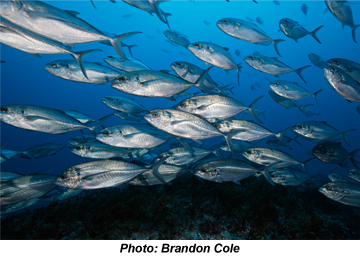
Jack mackerel stocks in the southern Pacific have declined from 30 million metric tons to less than 3 million in just 20 years. Photo: Eduardo Sorensen / OCEANA

Eric Pineda, a dock agent in Talcahuano, an old port south of Santiago, peered deep into the Achernar's hold at a measly 10 tonnes of jack mackerel; the catch after four days in waters once so rich they filled the 17m fishing boat in a few hours.

Mr Pineda, as with everyone in the port, grew up with the bony, bronze-hued fish they call jurel, which roams in schools in the southern Pacific.

''It's going fast,'' he said as he looked at the 17m boat.

''We've got to fish harder before it's all gone.'' Asked what he would leave his son, he shrugged.

''He'll have to find something else.''

Jack mackerel, rich in oily protein, is manna to a hungry planet, a staple in Africa. Elsewhere, people eat it unaware; much of it is reduced to feed for aquaculture and pigs. It can take more than 5kg of jack mackerel to raise a single kilogram of farmed salmon.

Stocks have dropped from an estimated 30 million tonnes to less than a tenth of that in two decades.

The world's largest trawlers, after depleting other oceans, now head south toward the edge of Antarctica to compete for what is left.

An eight-country investigation of the fishing industry in the southern Pacific by the International Consortium of Investigative Journalists shows how the fate of the jack mackerel may foretell the progressive collapse of fish stocks in all oceans.

In turn, the fate of this one fish reflects a bigger picture: decades of unchecked global fishing pushed by geopolitical rivalry, greed, corruption, mismanagement and public indifference.

An eminent University of British Columbia oceanographer, Daniel Pauly, sees jack mackerel in the southern Pacific as an alarming indicator.

Thursday, January 26, 2012

Greening the Economy is Good for Business: Agence France Presse

The worldwide fishing industry could benefit from a $50 billion boost annually if stocks were allowed time to recover, the UN said Wednesday.
 
Already 32 percent of the world's fish stocks have been depleted by years of overfishing and poor coastal management, according to a UN Environment Programme report released in Pasig City.
 
"The potential economic gain from reducing fishing capacity to an optimal and restoring fish stocks is in the order of $50 billion per annum," a summary of the UN report said.
 
The report said overfishing, pollution from land-based farming and industry, and the destruction of habitat, including coral reefs and mangroves, were all having an effect on fish stocks.
 
This was directly affecting the 540 million people around the world who are dependent on the fishing industry, experts at the launch of the "Green Economy in a Blue World" report said.
 
Cutting pollution would help fish stocks and fishermen's catches to rebound, Amina Mohammed, deputy executive director of the UNEP, said.
 
"Many ocean industries and businesses stand to benefit directly from cleaner, more ecologically robust marine ecosystems," she said.
 
While overfishing reduces fish stocks, pollution from the overuse of fertilizer in farming is also a major problem, she said.
 
The fertilizer washes into the sea, resulting in runaway growth of algae which sucks up all the oxygen in the waters and causes fish to "drown".
 
Experts have said there are over 500 oxygen-deprived "dead zones" in waters around the world created in such a way.
 
Europe could save at least $100 million annually just through improvements in fertilizer use to stop it affecting the oceans, said Linwood Pendleton, an oceans and coast expert from the United States' Duke University.
 
Marine specialist Raphael Lotilla said that as much as 49 percent of all fertilizer used in Philippine farms ended up being washed into the sea.
 
"Let's work with farmers to figure out what is the right amount of fertilizer so everyone wins," Mohammed said.
 
The UN report also said marine-based renewable energy sources like wind, wave and tidal power, have huge potential but are not yet cost competitive.
 
It called for "long-term policies and targeted financial support from governments" such as grants, subsidies and tax credits, to improve the technology and bring costs down.
 
It also called for more measures to curb destruction of coral reefs, mangroves, seagrass beds and other marine habitats, as well as measures to prevent the spread of "invasive species" carried by ships' hulls.
 
Such species cause an estimated $100 billion in losses each year, the report said.
United Nations Report: Green Economy in a Blue World 

Monday, January 23, 2012

A long-simmering debate over federal fishing quotas and their economic impact on Florida and other coastal states could reach a boiling point this year as Congress considers changes to a landmark marine conservation law.

The fishing industry is pressuring Congress to ease annual catch limits for summer flounder, red snapper, and other species, saying quotas are squeezing commercial and recreational fishing businesses and depriving coastal communities of billions in revenue.

The issue is particularly emotional along the Gulf Coast of Florida, where catch limits on grouper and red snapper and other federally managed fish have ravaged industry-dependent businesses, including restaurants, hotels and charter boat operations.

Ron Crum, a former commercial fisherman who owns a bait and tackle shop in Panacea, said the local fishing industry is disappearing because of high fuel costs and federal restrictions.
“People come by my door (who have) been with me 10 or 15 years … and they’re going back to 

Tennessee, North Georgia and to other places,” he said. “We’re creatures of habit. You manipulate these people around (by cutting) the season, and they will quit.”

Critics like Crum accuse the government of using outdated science to set the catch limits under the Magnuson-Stevens Fishery Conservation and Management Act. They can’t understand why such severe restrictions are in effect when they see so many snapper and other fish swimming under their boats.

And, they say, the Obama administration has not properly implemented the law because economic consequences such as the effect on coastal businesses are not being taken into consideration. Crum said recently imposed limits on gag grouper will sting the Gulf Coast this year.

The administration and environmentalists are pushing back, saying catch limits must remain in place to prevent overfishing of species that were decimated before Congress adopted the law in 1976 and began to rebound only in the past 15 years or so.
continue>>>> 

Monday, January 9, 2012

U.S. Tightens Fishing Policy Setting 2012 Catch Limits for All Managed Species by Juliet Eilperin

Catch limits are intended to protect the 528 species in federally managed fisheries. Some species have rebounded from past overfishing; others are still declining. The map below features examples from each U.S. region. 

In an effort to sustain commercial and recreational fishing for the next several decades, the United States this year will become the first country to impose catch limits for every species it manages, from Alaskan pollock to Caribbean queen conch.

Although the policy has attracted scant attention outside the community of those who fish in America and the officials who regulate them, it marks an important shift in a pursuit that has helped define the country since its founding.

Unlike most recent environmental policy debates, which have divided neatly along party lines, this one is about a policy that was forged under President George W. Bush and finalized with President Obama’s backing.

“It’s something that’s arguably first in the world,” said Eric Schwaab, the National Oceanic and Atmospheric Administration’s assistant administrator for fisheries. “It’s a huge accomplishment for the country.”

Five years ago, Bush signed a reauthorization of the Magnuson-Stevens Act, which dates to the mid-1970s and governs all fishing in U.S. waters. A bipartisan coalition of lawmakers joined environmental groups, some fishing interests and scientists to insert language in the law requiring each fishery to have annual catch limits in place by the end of 2011 to end overfishing.

Although NOAA didn’t meet the law’s Dec. 31 deadline — it has finalized 40 of the 46 fishery management plans that cover all federally managed stocks — officials said they are confident that they will have annual catch limits in place by the time the 2012 fishing year begins for all species. (The timing varies depending on the fish, with some seasons starting May 1 or later.) Some fish, such as mahi-mahi and the prize game fish wahoo in the southeast Atlantic, will have catch limits for the first time.
Read more @ WashingtonPost.com 

Research Effort Aims to Tap Ocean's Solutions by Carlos Duarte


The wealth in the Indian Ocean drove the first Dutch visitors to accidentally sail to WA's shores, in their pursuit of a faster route to reach the Spice Islands. Four centuries later, its turquoise blue waters offer a sea of opportunities just within our reach.

There is still a lot we don't know about the Indian Ocean, which is arguably the least explored of the world's oceans. But we do know that it - like many other oceans around the world - is under stress from overfishing, pollution, climate change and sea level rise.

There are many good reasons why we should step up our efforts to explore the Indian Ocean. First, it will help us solve some of the problems outlined above. But excessive emphasis on the problems of the oceans conceals the role they must also come to play as a source of untapped solutions and new streams of wealth.

The Indian Ocean already provides us with a big part of our livelihood through fisheries (both professional and recreational), tourism, and the offshore oil and gas industries that are fuelling the growth of WA's economy. By harnessing the ocean's energy and resources we can address some of humanity's greatest challenges such as food and water security, clean energy supplies and healthy marine ecosystems.

While we live on a planet mostly covered with water, we get most of our resources from land. We need to reverse that thinking. The world's population recently reached seven billion people, and is expected to swell to nine billion by 2050. We must turn to the oceans to meet the needs of this growing global population. Let me give some examples of how the Indian Ocean can provide us with solutions to help us face future challenges.

The first example comes from the increasingly realised potential to use genes of marine organisms to solve problems in bioenergy, food, pharmaceutical and human health. Realising these potentials must be a driver to explore marine biodiversity, with WA being one of the global marine biodiversity hot spots. Yet only some 10 per cent of named species are marine species and the rate of discovery of marine species is so slow that it will be 200 to 1000 years before a complete inventory of marine species is available.

Secondly, many West Australians have visited the World Heritage area of Shark Bay and admired its stark beauty. What they may not know is that the extensive seagrass meadows at Shark Bay act as a giant sponge soaking up vast amounts of carbon dioxide from the atmosphere, and can help mitigate climate change, similar to the way trees in the Amazon rainforest can soak up carbon dioxide. The extensive seagrass meadows in WA can also mitigate the impacts of rising sea level on our coast and beaches, by dissipating wave energy and trapping sediments.

The role of seagrass in removing carbon dioxide from the atmosphere and mitigating the impacts of climate change is the subject of a recent new scientific initiative referred to as Blue Carbon, which you will probably hear more of in coming years.

Thursday, January 5, 2012

Did the Chesapeake Bay Turn the Corner in 2011? by Dan Klotz

                                Sunrise off of Sandy Point State Park, MD. Credit: Dan Klotz

2011 may go down in history as the turning point for the Chesapeake Bay.  The largest estuary in the United States, the Bay’s watershed includes almost 20 percent of the country’s Atlantic coast and produces an estimated 500 million pounds of seafood every year.

In many ways, unfortunately, the Chesapeake Bay is ground zero when looking at the environmental impact of our food production. Inundated by pollution from factory farms, as well as sewage treatment plants, vehicle exhaust and power plant emissions, the Bay’s reputation as a high quality source of crabs and seafood has suffered over the years.


As chicken replaced beef as the number once source of protein on American dinner plates, the number of chickens crammed into factory farms—agricultural operations raising chickens and other farm animals on an industrial scale—has skyrocketed.  According to Food & Water Watch, Maryland has six factory-farmed broiler chickens (those raised for meat, not eggs) for every one person in the state. Think that’s a lot? Delaware has 19 factory-farmed broiler chickens for every human resident of the state.


The pollution from these facilities has been especially difficult to control.  The chicken manure and their bedding is dried in large piles and then spread as fertilizer on nearby farm fields.  Unfortunately, the amount of waste far exceeds the capacity of the crops to absorb the nutrients, and every time it rains the excess runs off the fields into nearby streams and then flows into the Chesapeake Bay.

According to the Chesapeake Bay Foundation, the runoff from farm fields accounts for 40 percent of the nitrogen and 50 percent of the phosphorous entering the Bay. As the key nutrients in fertilizer, nitrogen and phosphorous promote plant growth everywhere—and in water, this means the growth of algae blooms that consume the oxygen in the water.

In centuries past, marine species known as “filter feeders” would consume the algae and other types of plankton, keeping the water clean.  These filter feeders include well-known species such as oysters and mostly unknown species such as Atlantic menhaden.  But while the runoff from factory farms has vastly increased the amount of food for the filter feeders, overfishing has decimated their populations.


Atlantic menhaden, for example, once existed in vast quantities so large that schools once stretched for dozens of miles. A small innocuous fish no more than a foot in length, it can eat the algae in more than four gallons of water every minute.  Menhaden are the food of choice for seabirds, whales and marine mammals, and predator fish like the striped bass, blue fish, bluefin tuna, king mackerel, and Atlantic tarpon.


Unfortunately, more menhaden are caught on the U.S. Eastern seaboard than any other species, even though they are not caught for food. Instead, more than three quarters of this catch is brought to a processing factory at the mouth of the Chesapeake where the fish are “reduced” to oil—for omega 3 fatty acid pills—as well as fertilizer, factory farm feed, pet food, lipstick, and other commercial products.


Atlantic menhaden image courtesy of U.S. Fish and Wildlife Service.

Scientists from the Virginia Institute of Marine Sciences looked at the number of menhaden thought to be in Chesapeake Bay and then examined the amount of algae thought to be growing in the Bay’s waters.  They concluded that there weren’t enough menhaden to slurp up all the algae, and their study was cited by the commercial fishing industry as proof that menhaden had a limited ecological role as it fought against efforts to lower its annual catch.

Friday, December 30, 2011

Overfishing 101: Celebrating a Good Year for Marine Conservation by Lee Crockett Director, Federal Fisheries Policy Pew Environment Group

In October, I spent two days fishing off Montauk, N.Y. In fact, I was quite sore by the end of the second day after reeling in dozens of false albacore, bluefish, and striped bass.

The success of the trip was due in part to the skill of my guide, Captain John McMurray. But it also is a testament to the health of the three stocks we were targeting. More fish mean better opportunities for anglers, increased economic benefits to fishermen and coastal communities, and healthier marine ecosystems. Everyone wants more fish in our oceans -- the challenge today is finding the right way to achieve that goal.

A Year to Remember

This was a historic year for United States ocean management. Thirty-five years after the Magnuson-Stevens Fishery Conservation and Management Act (MSA) was enacted, we have finally established a system that, if implemented properly, will keep countless marine species healthy and ensure fishermen stay on the water.

By early 2012, science-based annual catch limits should be in place for all of our federally managed ocean fisheries. The regional management councils and the National Marine Fisheries Service (NMFS) deserve a lot of credit for their hard work and their pragmatic and innovative approaches to achieve this important goal. Based on my 25 years of experience with these issues (including a four-year stint at the Fisheries Service), I know this was an extremely heavy lift, and we at Pew congratulate NMFS Director Eric Schwaab and the regional councils on this remarkable accomplishment.

Although we are making significant progress toward restoring depleted fish populations, the job of ending overfishing is far from complete. We also cannot ignore the fact that some fishermen have been hit hard by the short-term quota reductions that are needed to reverse decades of mismanagement.
2011-12-22-Untitled2.jpg

Watering down the MSA or postponing deadlines to restore our fish to healthy levels won't benefit anyone in the long run. Instead, we need to focus on solutions to help fishermen make the transition to sustainability through targeted assistance. We also must improve the quality and timeliness of science that managers use to set catch limits and make other important decisions.


This year, the Pew Environment Group worked hard with fishermen and environmental organizations to call on Congress to make funding for fisheries data collection and analysis a budget priority. We are also supporting congressional efforts to provide a long-term, stable funding source for critical research and management programs without increasing federal spending. These resources would address some of our most pressing needs, including support for stock assessments, cooperative research, socioeconomic analysis, and development of environmentally friendly gear. 

A Startling Threshold for Seabird Survival by Erik Stokstad ScienceNOW

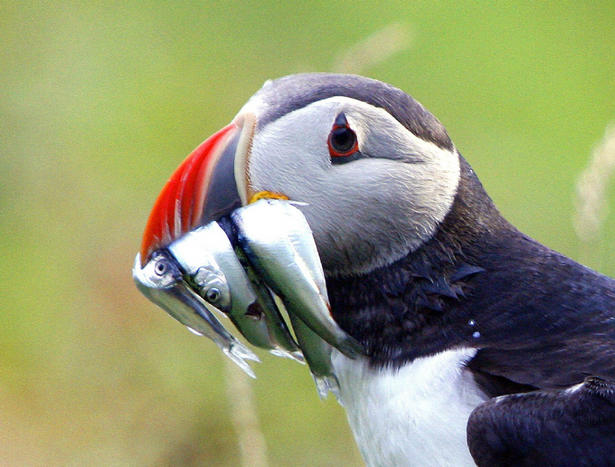
An Atlantic puffin with a mouthfull of small fish stands on Norway's Runde island in this file photo from 2007. The Atlantic puffin offers an example of what can happen with overfishing. When herring stocks in the Norwegian Sea were overfished and crashed in the 1960s, the puffins had trouble reproducing and their population plummeted by 64 per cent.

Fishing can have devastating effects on seabirds. Not only do they get snagged on hooks and tangled in nets, but chronic overfishing can deprive the birds of their prey — the same small fish that fishermen are catching.

Now a study has identified what appears to be a universal threshold for danger: When the biomass of so-called forage fish drops below one-third of its maximum, seabirds of many species start to have fewer chicks.

“This is one of the most important seabird papers to be published in some time,” comments conservation biologist Dee Boersma of the University of Washington, Seattle, who was not involved in the research.

The findings demonstrate the widespread reliance of seabirds on small forage fish, Boersma says.
To protect the birds, the papers’ authors call for lower harvest levels of forage fish.

“The problem remains that most fisheries are not properly managed and controlled,” says co-author Philippe Cury of the Institute of Research for Development in SĆØte, France.

Around the world, about 25 per cent of forage fish stocks have collapsed, Cury says.

A classic example of seabirds that suffered from overfishing is the Atlantic puffin in Norway. When herring stocks in the Norwegian Sea crashed in the 1960s, the puffins had trouble reproducing and the population plummeted by 64 per cent.

But how typical was that response, and at what point does trouble begin for seabirds? To look for a general relationship between the abundance of forage fish and birds’ breeding success, Cury and an international team of researchers examined data on fish and 14 species of seabirds from seven ecosystems around the world. The records ranged from 15 to 47 years in length.

All bird species showed the same response, the team reports in the Dec. 23 issue of Science: the number of fledglings per breeding pair started to decline when the abundance of forage fish dropped below one-third of the maximum observed amount.

“The biggest surprise was the consistency of the relationship,” says co-author Ian Boyd, a mammalogist at the University of St. Andrews in Scotland. “It bowled us all over.”

Boyd says that once prey become too scarce, hunting probably becomes inefficient and the birds lack enough food to successfully raise as many young.

Although seabirds are adapted for the vicissitudes of life — forage fish numbers have large natural fluctuations — seabirds populations may decline when fishing depresses levels for many years in a row. “It’s a corrosive effect,” Boyd says.

“Keep one-third for the birds” — that would be a useful guide to managing forage fisheries so that seabird populations remain resilient, the authors say.

Saturday, December 24, 2011

Black Sea Turtles Return To Baja California, But So Do Poachers From Dr. Wallace J. Nichols

Every expedition begins well before the official start and ends far after its conclusion. This is especially the case with The Black Turtle Project, an unfolding and evolving effort to join conservation photography, communication and biology. I can assure you that this project began long ago and will live on into the future. The past two weeks in Baja are just the start of a collaborative effort that will transpire over the coming year and document the nascent and emerging success story of the black sea turtle's return to the Pacific coast of the Americas.

For myself, the expedition links back to graduate school and a decision to -- against the odds, against my advisors' wishes and with no funding to speak of -- focus several decades of my life on sea turtle research and conservation. For conservation photographer and Associate Fellow of the International League of Conservation Photographers, Neil Ever Osborne, this project also extends back into his past and includes his decision to pick up a camera and set aside a career as a biologist. For our colleagues in Mexico, from Michoacan to Baja California, this project represents decades of committed conservation efforts, dedication in the face of despair, thousands of all-nighters and -- most-recently -- some signs of hope. The story of the black turtle is about people: poachers, children, scientists, artists, fishers, politicians, teachers, conservationists, photographers, narco-traffickers, guides, leaders and followers, musicians. What I've come to realize is that all of the people in this story wear several of those hats, simultaneously or sequentially.

In the late 1990's the location in Baja that we are visiting now was one of our research sites. We caught black turtles here, tagged them, measured and weighed them and then released them back into the bay. We learned that young turtles caught here would return to the same spot, even if released in another part of the bay. But eventually poachers wiped out all of the sea turtles at our site, making our research impossible. So we moved our efforts to a different part of the bay.

Alejandro Osuna was one of those sea turtle hunters. With his father he caught and cooked sea turtles right where we are camped now, in the mangrove-lined Estero Los Cuervos, a branch of Bahia Magdalena. Now Alejandro is our captain and guide, one of the local leaders working to bring back the turtles. When we arrived to our former site to set our research nets we weren't sure what we might find. Had the turtles come back, just like many other locations along the Baja coast or was the area still recovering. The plan was to set out our nets for 24 hours to find out if Estero Los Cuervos could be a viable monitoring site, as it was so many years ago. Our answer came more quickly than expected, but not using the techniques we anticipated. At our site we found that a net was already there. It was an illegal net belonging to poachers who had set it for turtles. Alejandro wasn't pleased.Read more @HuffingtonPost.com

Wednesday, December 21, 2011

Governments unite to call on Japanese whalers and Sea Sheperd protesters to behaves themselves by Alison Rehn

Whaling: A protestor throws a bottle of rotten butter, at Japanese whaling ship Yushin Maru No 1 in the Antarctic Ocean in 2009. Picture: AP. Source: AP


In a joint statement, the governments of Australia and the three anti-whaling nations condemned any actions that risked lives in the Southern Ocean.

Japanese whalers and protesters from the Sea Shepherd Conservation Society have had several near misses on the high seas in years past.

"We are deeply concerned that confrontations in the Southern Ocean will eventually lead to injury or loss of life among protestors, many of whom may be nationals of our countries, and whaling crews," the joint government statement said.

"We call on the masters of all vessels involved in these actions in the Southern Ocean to take responsibility for ensuring that safety of human life at sea is their highest priority."


Australia, the US, New Zealand and the Netherlands said they remained "resolute" in their opposition to commercial whaling - including so-called "scientific" whaling - and that lethal techniques were not required in modern whale conservation and management.

They said they were "disappointed" at the recent departure of the Japanese whaling fleet for the Southern Ocean.

"Our governments respect the right of individuals and groups to protest peacefully, including on the high seas," the statement said.

"At the same time, we condemn dangerous or violent activities from all participants on either side.

"We are prepared to deal with any unlawful activity in accordance with relevant international and domestic laws."

Thursday, December 15, 2011

Nations Unite Against Japan's Annual Whale Hunt

 
The United States, Australia, New Zealand and the Netherlands have said they were "disappointed" over the start of Japan's annual whale hunt off Antarctica and warned against violent clashes. 

Japanese ships operating in the icy waters of the Southern Ocean have in recent years faced interference from the US-based militant environmentalist group Sea Shepherd, with repeated confrontations on the open seas.

The United States and its partners said while they supported the right to peaceful protest, any violence between whalers and demonstrators was unacceptable.

"The Governments of Australia, the Netherlands, New Zealand, and the United States jointly condemn any actions that imperil human life in the Southern Ocean," they said in a joint statement released by the US State Department.

"We are deeply concerned that confrontations in the Southern Ocean will eventually lead to injury or loss of life among protesters, many of whom are nationals of our countries, and whaling crews," they said.

"We remain resolute in our opposition to commercial whaling, including so-called 'scientific' whaling, in particular in the Southern Ocean Whale Sanctuary... and are disappointed about the recent departure of the Japanese whaling fleet for the Southern Ocean."
Read more:
 

Tuesday, December 13, 2011

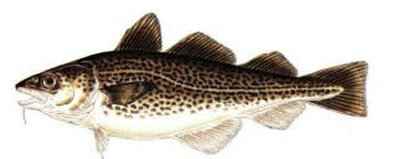
Scientists Say Cod Still Overfished By Steven A. Rosenberg

A preliminary assessment that cod are still being overfished could lead to further tightening of federal regulations on a fish that has been associated with the region for more than 400 years.

Last week, a group of scientists met at Woods Hole and backed the preliminary analysis of the area’s cod stock prepared by the National Oceanic and Atmospheric Administration, which oversees fishing in federal waters. The analysis, released last month, asserted that even if all fishing of Gulf of Maine cod was prohibited, it would be unlikely that the stock would be rebuilt by 2018, some four years after NOAA had expected cod to rebound to healthy amounts.

The analysis contrasts with a 2008 NOAA report that showed cod stock on the rebound. But the new report suggests that the previous assessment may have overestimated the amount of cod in the sea by nearly 300 percent. NOAA conducts its research with ocean trawlers, uses academic scientists to study fishing stocks, and incorporates statistical reports of fish landings submitted by fishermen and seafood dealers into its reports.

In recent weeks, fishermen have called for the government to review its latest findings and said any new regulations could have a devastating impact on the local fishing industry.

“We stand to lose everything and it’s not fair. Their calculations are incorrect and we need some help to get it changed,’’ said Dennis Robillard, a Gloucester fisherman who estimated that cod constitute 90 percent of his annual catch. “We’re seeing cod in places that we don’t normally see them. They seem to be, for all intents and purposes, everywhere we fish.’’

“The preliminary stock assessment is troubling and could have a disastrous effect on our local fishermen,’’ US Representative John Tierney, a Salem Democrat, said in a prepared statement. Tierney, who has called for the Department of Commerce to provide disaster assistance to the fishing community, also questioned the assessment’s findings. “It underscores the continuing need for better data and science upon which to make such important decisions.’’
 

According to NOAA spokeswoman Teri Frady, the latest cod assessment is more robust than the 2008 study, and corrects a previously accepted finding that there was an abundant amount of cod born in 2005. The new assessment also includes more data on both commercial and recreational discards that were not available 2008, and includes improved biological data about fish growth, according to Frady.

While the final assessment is set to be released next month, discussions have already begun between members of the fishing industry and federal regulators on how to keep the battered groundfish industry alive.
From articles.boston.com/ 

Wednesday, December 7, 2011

Rebuilding Our Fishery and Our Future: Glen Brooks Speaking Out

The Gulf Fishermen’s Association represents several hundred commercial fishermen in the Gulf of Mexico and more than half of the red snapper and grouper industry. We are dedicated to providing fresh domestic seafood to America’s citizens year-round in a sustainable fishery. 

We can tell America first-hand how fishing jobs were prior to implementation of our catch share programs. Our industry was eating itself alive.

The more we competed, the shorter our seasons became and the longer we had to run to catch fish. The science was right, fish stocks were declining. Shorter seasons caused greater waste, gluts of older product, lower prices, and less income.

As income dropped we fished with dilapidated boats in worse weather with less qualified crews for fewer fish. Things got so bad that a plan was developed that would eliminate more than a third of the boats in the fishery. Cheap fish worked great for the big fish houses and the Mexican fishermen who sold to them during our closures, but not so well for American fishermen.

In search of a solution, Gulf fishermen worked with the regional Fishery Management Council to develop catch share programs. Both programs were approved by more than 80 percent in referendums of reliant fishermen. 

Today, we have real jobs, year round, for the first time in many years. When we go fishing, we actually catch fish again, and are becoming profitable. We are starting to enjoy real lives, with less danger. Prices are up, and imports are down. Qualified fishermen are in demand. 

And the most incredible thing? While that is happening we are rebuilding our fisheries by avoiding overfished stocks and reducing waste. Many responsible fishermen have been able to fish for several years with near zero dead discards of overfished stocks. This would be impossible with any other program.

Fishing year-round while rebuilding the fishery is a great thing for jobs now, and in the future.

Not one single fish has been taken from anyone for our programs. We are producing better science, under discrete catch limits that are easier to enforce, with fewer wasted fish, and fishing more sustainably than ever in the history of Gulf fishery management. This benefits every fishermen and every American, yet we are amazed at some of the claims we have heard even from legislators.

Wednesday, November 30, 2011

Overfishing

Many marine ecologists think that the biggest single threat to marine ecosystems today is overfishing. Our appetite for fish is exceeding the oceans' ecological limits with devastating impacts on marine ecosystems. Scientists are warning that overfishing results in profound changes in our oceans, perhaps changing them forever. Not to mention our dinner plates, which in future may only feature fish and chips as a rare and expensive delicacy.

The fish don't stand a chance

More often than not, the fishing industry is given access to fish stocks before the impact of their fishing can be assessed, and regulation of the fishing industry is, in any case, woefully inadequate.
The reality of modern fishing is that the industry is dominated by fishing vessels that far out-match nature's ability to replenish fish. Giant ships using state-of-the-art fish-finding sonar can pinpoint schools of fish quickly and accurately. The ships are fitted out like giant floating factories - containing fish processing and packing plants, huge freezing systems, and powerful engines to drag enormous fishing gear through the ocean. Put simply: the fish don't stand a chance.

Ocean life health check

Populations of top predators, a key indicator of ecosystem health, are disappearing at a frightening rate, and 90 percent of the large fish that many of us love to eat, such as tuna, swordfish, marlin, cod, halibut, skate, and flounder - have been fished out since large scale industrial fishing began in the 1950s. The depletion of these top predator species can cause a shift in entire oceans ecosystems where commercially valuable fish are replaced by smaller, plankton-feeding fish. This century may even see bumper crops of jellyfish replacing the fish consumed by humans.
These changes endanger the structure and functioning of marine ecosystems, and hence threaten the livelihoods of  those dependent on the oceans, both now and in the future.

Sunday, November 27, 2011

The Misunderstood Shark


Sharks play an important role in controlling the fish population and the spread of diseases.

Oakley explains, “I like to think sharks act as the health inspector of the sea. It’s like this: When we’re ill, we see a doctor. Normally, when fishes are ill, they just die or become prey for sharks.


Now that there are less sharks, we find that there are more sick fishes in our nets. So we end up eating sick fishes. You can’t possibly have a healthy marine life when you kill 100 million of its main predator every year.”


He says sharks learn to recognise divers and researchers. He recalls photographing underwater marine life one time when he noticed his dive buddy laughing. When he turned around, he saw a huge shark swimming away. His dive buddy later told him that the shark swam above him a few times. “It’s as though the shark was curious to see what I was photographing.”


Passionate about shark conservation, Oakley presents a dismal account of the dwindling shark population currently: “In some places, there aren’t any sharks left. It’s not that they are extinct.


There just aren’t many of them in certain places.”


The main reason for this dire situation is overfishing. Oakley explains: “Before, shark’s fin soup was a delicacy which few could afford. Since China started becoming wealthy, the demand for this dish has increased.”


“In any given place, where there used to be 100 sharks, now there may be two. What’s more, sharks will only mate with their own species.”

Saturday, November 26, 2011

Mass Whale Slaughter in Faroe Islands Turns Sea Blood Red


The sea of Faroe Islands in north of Europe turned red with the blood of hundreds of whales killed by the inhabitants, as a part of their annual whale hunting culture.

Every year the islanders catch and slaughter pilot whales (Globicephala melaena) during the traditional whale hunt known as 'Grindadrap'.

Being an autonomous province of Denmark, where whaling is banned, the Faroe Islands’ laws allow the mass slaughter of pilot whales, beaked whales and dolphins to observe the annual tradition.
“It is unacceptable for the Faroe Islands to preserve separate laws that allow inhabitants to continue the whale slaughter,” PETA mentions in its action alert “Stop the Bloody Whale Slaughter” urging government to stop the massacre.

The Faroese are descendents of Vikings, and pilot whales have been a central part of their diet for more than 1,000 years. The mass hunting is non-commercial; the whale meat cannot be sold but is divided evenly between members of the local community.
Despite criticism from animal rights groups and International Whaling Commission, the whale hunting custom continues to kill thousands of whales year after year.

The hunters crowd the whales into a bay and then cut their spines leaving the animals bleed to death slowly. According to PETA, some whales swim around in their family members' blood for hours.
“Whales and dolphins are highly intelligent creatures and feel pain and fear every bit as much as we do. They are forced to watch their families die while swimming around in the bloody water, waiting to be slaughtered themselves.”

A few pictures below shows how the gruesome slaughtering near the capital Torshavn in Faroe Islands made the sea turn red with blood: