Showing posts with label Lakes. Show all posts

Tuesday, October 2, 2012

Lake Baikal - in deep water?


Lake Baikal in central Asia is one of the natural wonders of our planet. Known as the 'Galapagos of Russia', it contains a unique flora and fauna - most of the 2000 plus plants and animals that live in its deep waters are endemic - found nowhere else.
A top predator in the lake, Pusa sibirica, is one of the world's very few species of freshwater seals, and up to 40 per cent of Baikal's species have not even been described yet. It is a major biodiversity hotspot, declared a World Heritage Site by the UN in 1996.
Baikal's endemic species have evolved over tens of thousands, perhaps millions, of years, to occupy niches that may never have been disturbed before the last three or four decades.
The lake's unique ecology stems from its physical properties. Baikal is the oldest lake in world; it started forming over 25 million years ago when a fissure in the continent began to open up. It is also the planet's deepest lake, averaging 744m deep and going down to 1642m in places, due to a tectonic pulse that made the rift's shoulders rise up while the bottom continued to deepen.
Astonishingly, Lake Baikal accounts for over a fifth of all surface fresh water on Earth, outside polar ice caps and glaciers. And unlike other deep lakes, it contains dissolved oxygen right down to the bottom.
This is because cold surface water regularly flows deep into the lake, driven by strong winds and complex differences in water temperature. This lets animals thrive at all depths, and ensures that nutrients are efficiently recycled. Baikal's great age and stable deep-water environments created evolutionary conditions that led to the extraordinary numbers of endemic species found there today.

Tracing pollution

Industrial development on the shores of the lake gave rise to Russia's first environmental movement in the 1960s. The most infamous development was the construction of the Baikal Paper and Pulp Mill (BPPM) which produces hundreds of thousands of tonnes of bleached pulp a year and discharges pollutants such as sulphates and organic chlorine compounds into the lake. Many other toxic compounds have come from mining, agriculture and general population growth.
                                                                                 Extracting a mud core from the lake.
I started working on Lake Baikal 20 years ago with a team of scientists from UCL, University of Liverpool and the Limnological Institute at Irkutsk, to investigate the effects of pollution from urbanisation and the BPPM. We had no long-term pollution records, but because particles in the water, including pollutants, eventually sink to the bottom of the lake, we had a natural archive of lake mud which we could study by extracting a mud core.
Specifically we looked for changes in diatoms - microscopic algae in a silicon shell which sit at the base of the food chain. Some diatoms are more sensitive to pollution than others, so we can determine the impact of past pollution by looking at species changes preserved in the lake mud. We found small changes in diatom species in a few shallow water areas, which may have been caused by increased nutrients like nitrogen in the water, linked to population growth and agriculture - for example from fertilisers running off nearby farmland. We also found evidence of pollution from burning fossil fuels though this did not affect the diatoms.
Since then, the threats to Lake Baikal have increased because of the exploitation of valuable minerals and energy resources in Baikal's vast drainage basin - more than twice the size of the UK because of the Selenga River that extends into northern Mongolia. We also know that global warming is directly affecting ice cover and surface-water temperature in the lake.
In turn these changes have influenced small organisms living in the open water, including tiny plants and animals (respectively known as phytoplankton and zooplankton). Warmer temperatures are also melting frozen soils (permafrost) in the drainage basin, releasing further nutrients into the lake. Human activity from industry and agriculture raises nutrient input even more.
This rise in nutrients means more algae of more different kinds are found in the lake, which in turn influences other aquatic species. So it is essential to understand these changes now, before they become too great and irreversibly damage this unique ecosystem.

Looking into the lake's future

We have assembled a new team to investigate these threats by studying isotopes of silicon (Si), which controls the growth of diatoms at the base of the food chain, and can tell us about nutrient levels in the lake.
Because Baikal is so enormous, we will spend a lot of time on a research ship next summer, taking samples of water and algae at many locations along a line running from north to south, and from the surface water right down to the depths. We will also do fieldwork in March, when the lake is covered by ice. Winter working conditions are extreme - temperatures can drop to below -30°C, and to access the water you have to dig through meter-thick ice.
                                                                                                        The freshwater seal Pusa sibirica.
An important goal is to place modern-day nutrient uptake in the lake into a much longer historical context, so we will extract new sediment archives especially for this project. Working on the ice will give us a very stable platform from which to drop special coring equipment attached to metal cables down through the water, into the mud, and then to pull them back up again with a motorised winch.
We know from previous experience that just 50cm of lake mud can give us a historical record going back over 1000 years.
Baikal is still relatively pristine. Yet real threats remain, including discharge of pollutants into the Selenga River, direct pollution of the lake from the BPPM, and global warming.
Because water stays in the lake for around 400 years, pollutants entering now could build up for centuries to come. Protective measures have already been taken, including the 'Baikal Law', designed to regulate environmental and economic activities in the drainage basin. However, these have had limited success - the BPPM closed down for a couple of years because of environmental concerns, but it reopened in 2010 to much controversy.
The lake's future is still wide open, as economic activity continues to grow along its coastline and in its drainage basin. Global warming could also alter its delicate balance of species. Our research will help provide the knowledge that's needed to understand this still-unspoiled jewel in Russia's crown.


Thursday, August 30, 2012

Saving China's Largest Freshwater Lake

Poyang Lake is China's largest freshwater lake, covering 4,000 square kilometers. It is home to more than 300 species of birds and 120 species of fish. Zhang Haiyan / For China Daily


Fisherman Zhang Qiulin said he has been anxious following the dramatic decrease of water levels on Poyang Lake over the last two weeks, despite the fact that the area is still in its rainy season.
Zhang said he fears a repeat of last year, when a historic drought killed many fish in Poyang, located in central China's Jiangxi Province.
Data from the provincial hydrographic bureau showed that the lake's water level had plummeted to 17.71 meters as of Sunday morning, down from this year's highest level of 19.65 meters on Aug. 13.
"Poyang has been drying up over the past decade, particularly from 2003 to 2008. During that time, its annual runoff was 23.2 billion cubic meters, or 15 percent, less than the average of previous years," said Wang Hao, a water conservancy expert with the China Institute of Water Resources and Hydropower Research.
Wang said the situation is likely to worsen due to the growing threat of climate change, which has been blamed for the lake's decreasing water level alongside human activity.
The average precipitation in Jiangxi in 2011 was 21 percent lower than the annual average for the past several years, the bureau's statistics indicated.
Reduced rainfall, rampant sand dredging and tourism-related exploitation have reduced the lake's size from 4,000 square km to about 200 square km.
The Three Gorges Dam and other projects built in the upstream areas of the Yangtze River caused the lake's dry season to arrive earlier than before, Wang said.
"A water conservancy project is needed at the mouth of Poyang, where water from the lake flows into the Yangtze River. The project could maintain water levels during the dry season and won't disturb water flows during the flood season," Wang said.
The lake's water volume and quality have a significant impact on Yangtze, as the lake's water discharges account for 15.6 percent of the river's annual runoff.
Moreover, the lake is a key water supply source for about 1 million people and an important home for numerous migratory birds and aquatic species.
A decline in the lake's water quality and degeneration of its ecology have worried environmental experts as well. Marion Hammerl, president of the Global Nature Fund, said urgent action by the international community is needed to halt the contamination of freshwater lakes, including the Poyang.
The Jiangxi provincial government has made some efforts to limit the exploitation of the lake, including shutting down construction cites and encouraging the development of a "recycling economy," said Hu Zhenpeng, vice chairperson of the local legislature.
The government has also moved to treat water on the branches of the Yangtze and prevent pollutants from entering the lake, Hu said.
Hammerl said the way water resources are managed should be transformed and existing water facilities should be upgraded.
Obsolete irrigation equipment should be replaced so as to facilitate water-saving agriculture and achieve sustainable development for the lake, she said.

Sunday, July 29, 2012

The Caspian Sea Is Dying

                                                                                  Caspian Sea from space (NASA, 2003)


The Caspian Sea is the largest enclosed water body in the world and it is located on the border of Asia and Europe. Its shoreline extends for 5360 km.

Caspian Sea is divided between the independent countries of Iran, Kazakhstan, Azerbaijan, Russia, Turkmenistan, and home to myriad ecosystem.

The coastal wetlands of the Caspian basin include many shallow, saline pools, which attract a variety of bird life and biodiversity. Over 400 species are unique to the Caspian. The sturgeon is famous the world around for the roe is produces. Approximately 90% of the world’s Caviar comes from Caspian Sea. The region is booming more important from strategic point of view.

In the mid-1990s oil and Gas brought an influx of foreign investment in energy development in the region.

Petrochemical and refining complexes ion the Absheron peninsula in Azerbaijan are major sources of land –based pollution and discharges and spills from oil and gas drilling in the Sea and onshore have serious impacts on the environment.

The former Soviet Republics are trying to attract more investors in the oil and gas sectors.

This leads to the beginning of extraction works to the ecology of the Caspian basin.

Oil and gas extraction, along with transportation and industrial production has been the source of soil, air and water pollution in the Caspian region. The contamination from phenols, oil products particularly oil extraction and pipeline construction has contributed to the pollution of about 30,000 hectares of land.

Due to the use of outdated technology, malfunctioning equipment and pollution from oil fields and refineries continues at a high rate in the former Soviet Republic.

In Kazakhstan the cases of blood disease, tuberculosis and other diseases are four times more common in the Caspian area than the rest of the country’s average. Water, which has been contaminated by oil products in Kazakhstan, is still used for drinking water. This contamination is cited as a reason for intestinal infections in Kazakhstan’s coastal areas.

There is no doubt that development of the oil and gas industry does have the significant impacts to the environment.

The untreated waste from the Volga River –into which half the population of Russia and most of its heavy industry drains its sewage-empties into the Caspian Sea.

The chemicals and pesticides are threats to the flora and fauna. Since 2000 due to the pollution thousands of seals died in the Caspian Sea. The pollution has weakened their immune systems.

The Caspian sturgeon and Caspian seal, one of two freshwater spices in the world, have been dying in large number as a result of polluters and poachers since the collapse of the former Soviet Union. As recently in 1980’s and beginning 1990’s Iran and former Soviet countries fishermen took more than 30,000 tons of sturgeon. The Caspian is a self-contained body of water into which the Volga River drains after passing through Russia’s industrial heartland. 130 large and small rivers flow into the Caspian Sea, nearly all of which flow into the north or west coast. Volga River the largest splits into a thousand smaller streams as it flows through a largely uninhabited delta feeding into the Caspian Sea.

The Ural, Kura and Emba Rivers also empty contaminations into the Caspian from industrial pollution, municipal wastes and agricultural runoff.

The Caspian is an ecosystem under stress. Existing pollution has damaged marine terrestrial communities.

The entry of international oil firms into the Caspian region to exploit oil and gas reserves holds the prospect for improved environmental protection.

A World Bank report says that the great sturgeon has lost 99 percent of its spawning grounds and the Russian sturgeon, 80 percent, because of dam construction on the river that feed into the Caspian. Contamination by DDT used in agriculture could be another factor contributing to the disappearance of the Caspian sturgeon because it could be a cause of infertility in the fish.
 

The over fishing of Sturgeon has caused a dramatic decline in fish stocks. The number of commercial fish has considerably been reduced. Some fish species have been included into the red book. The Zander and the Caspian thorn fish have disappeared.
 

The Caspian seal is the smallest seal is native to the Caspian is classed as vulnerable by the international Union for the Conversation of Nature.

They are 17 spices in the red book of Azerbaijan. There are 120 species of fish in the Caspian with greatest commercial value (sturgeon, salmon, sprat, shad, carp).
 

The fishery industry is very important to Azerbaijan economy.

A lack of regional cooperation, highlighted by the still unresolved legal status of the Caspian Sea. Weak environmental laws and regulation and the ability to enforce them is affecting efforts to protect the Caspian’s environment.

Polluted beaches and coastlines mean that swimming in most areas of the Sea is hazardous. The higher rate of cancer is recorded in the area .In order to improve the environment in and around Caspian Sea the countries like Iran, Russia, and other need to work together and implementation of modern technology is required.

The Caspian Sea still has miles of undeveloped Coastline. Along the shore in Turkmenistan and Kazakhstan. The south end of the sea is deep, dark and polluted from sewer pipes and factories drain from five littoral states. The air pollution from Tehran due to the old cars that lack catalytic converters falls out in the Caspian when the wind blows the smog north from Iran, contributing to pollution in the Caspian problem.

It is estimated those one million cubic meters of untreated industrial wastewater is discharged into the Caspian annually.

In the Azeri coastal City of Sumgayit during the Soviet era the environment was subjugated to industrial goals. Hundreds of thousands of tons toxic wastes each year released into the atmosphere or dumped into a creek that fed into the Caspian Sea. Now the pollution overwhelmed the sea around Sumgayit and Baku, creating a virtual dead zone. The area witnessed a dramatic rise in stillbirths and miscarriages. The untreated sewage is still dumped into the Caspian Sea.

Because of inadequately stored wastes the ground water is contaminated and the leakage into the Caspian Sea is likely. An important of Caspian Sea is its great diversity in different parts of the lake.

In some parts practically those adjoining river deltas, the lake water is fresh.
Biodiversity of the Caspian Sea increased after building the Volga-Don Canal opened in 1954. Fish and Crustacean in the Caspian Sea have the largest numbers of species, with 63% off all modern species.

Since 1978 the sea level has risen almost 7.4 feet. Unexpected flooding has caused lot of damages to residential areas. Due to the rise of water in Turkmenistan, the town of Darwish, which is detached from the western part of the mainland, is turning into an island and Cheleken and Karakul are sinking into the water as well. A six miles sewage pipeline in the Azeri coastal district of Azizbayov has been partially submerged by the rising water; causing the pump station they’re to malfunction and allowing sewage from the area to be discharged directly into the Sea. Up to 100,000 people in Coastal the spread of toxic wastes, contamination of water supplies, and loss of infrastructure due to the rising sea level have affected cities and towns in Azerbaijan alone.

In August 2001,Tengizchevron, the Chevron Texaco-led consortium developing the giant Tengiz oil field in western Kazakhstan, was fined $75 million for ecological damage.

Now in Azerbaijan and Kazakhstan new development projects are required to carry environmental insurance. In the past the Kazakh government fined polluters but now it is prepared to make sue that criminal charges are brought against the management of the enterprises, which break the country’s environmental protection legislation.

The countries of the region have begun to take measures to prevent pollution.

The lack of regional cooperation among the Caspian Sea countries continued to undermine individual state efforts to protect the sea and surrounding region.

The challenge of protecting the Caspian’s environment will become more difficult.

Without increasing cooperation by the littoral countries, the country of the environment in the Caspian Sea and surrounding areas will remain threatened.

By Morteza Aminmansour@Pars Times

Wednesday, July 18, 2012

Global Warming Harms Lakes

In the fall, the body of water already turns over at a depth of between zero and 20 meters and the Planktothrix comes to the surface from depths of 15 meters. It can form visible masses (blooms) at the surface. (Credit: Limnologische Station, UZH)


Global warming also affects lakes. Based on the example of Lake Zurich, researchers from the University of Zurich demonstrate that there is insufficient water turnover in the lake during the winter and harmful Burgundy blood algae are increasingly thriving. The warmer temperatures are thus compromising the successful lake clean-ups of recent decades.


Many large lakes in Central Europe became heavily overfertilized in the twentieth century through sewage. As a result, algal blooms developed and cyanobacteria (photosynthetic bacteria) especially began to appear en masse. Some of these organisms form toxins that can compromise the use of the lake water. Dying algal blooms consume a lot of oxygen, thereby reducing the oxygen content in the lake with negative consequences for the fish stocks.

The problem with overfertilization was not merely the absolute amount of oxygen and phosphorus, the two most important nutrients for algae. Humans have also changed the ratio between the two nutrients: The phosphorus load in lakes has been reduced vastly in recent decades, yet pollution with nitrogen compounds has not decreased on the same scale. The current ratio between the nutrients can thus trigger a mass appearance of certain cyanobacteria, even in lakes that have been deemed "restored."
Burgundy blood algae grow more rapidly
"The problem today is that mankind is changing two sensitive lake properties at the same time, namely the nutrient ratios and, with global warming, water temperature," explains Thomas Posch, a limnologist from the University of Zurich. In collaboration with Zurich Water Supply, he analyzed 40 years' worth of data in a study that has just been published in Nature Climate Change.
The evaluation of this historical data on Lake Zurich reveals that the cyanobacteria Planktothrix rubescens, more commonly known as Burgundy blood algae, has developed increasingly denser blooms in the last 40 years. Like many other cyanobacteria, Planktothrix contains toxins to protect itself from being eaten by small crabs. Burgundy blood algae were first described in Lake Zurich in 1899 and are a well-known phenomenon for Zurich Water Supply. Consequently, the lake water is painstakingly treated for the drinking-water supply to remove the organism and toxins completely from the raw water.
Warmer lakes have insufficient water turnover
But why does Planktothrix increasingly thrive? The most important natural control of the cyanobacteria blooms occurs in the spring, once the entire lake has cooled down vastly during the winter. Intensive winds trigger the turnover of the surface and deep water. If the turnover is complete, many cyanobacteria die off in the deep waters of Lake Zurich as they cannot withstand the high pressure, which is still 13 bars at depths of 130 meters. Another positive effect of this turnover is the transportation of fresh oxygen to the deep. However, the situation in Lake Zurich has also changed drastically in the last four decades. Global warming causes rising temperatures at the water surface. The current values are between 0.6 and 1.2 degrees Celsius above the 40-year average. The winters were increasingly too warm and the lake water was not able to turn over fully as the temperature difference between the surface and depths posed a physical barrier. The consequences are larger oxygen deficits for a longer period in the lake's deep water and an insufficient reduction of the Burgundy blood algae blooms.
Hope for cold, windy winters
"Unfortunately, we are currently experiencing a paradox. Even though we thought we had partly solved the nutrient problem, in some lakes global warming works against the clean-up measures. Therefore, we primarily need cold winters with strong winds again," says Posch. As far as the researchers are concerned, the winter of 2011/12 was just what the doctor ordered: The low temperatures and heavy storms allowed the lake to turn over completely and ultimately resulted in a reduction in Planktothrix.

Thursday, July 5, 2012

Hubei Confronts Its Lake Disappearing Act

                     Can a province once beloved for 1,000 lakes save the few that remain with new regulations?

The last lakes in Hubei Province are shrinking so fast that no one knows whether new government regulations – the latest leg of a 16-year-old environmental scramble – can reverse the disappearing act.

The province has been losing its once-bountiful lakes for about 100 years, but the destructive pace accelerated in modern times with extension draining projects for farmland and the expansion of water-dependent heavy industry.

Today, the total surface area of all provincial lakes is just 3,025 square kilometers, according to official statistics, compared to some 26,000 square kilometers of water in the early 1900s, when Hubei was called The Province of 1,000 Lakes.

Farm runoff and mine wastes have contaminated many of the surviving lakes in a wide region that includes either side of the Yangtze River valley below the 
Three Gorges Dam.

Water was deemed fit for human consumption in only one of 26 lakes recently surveyed by the Hubei Province Water Environment Monitoring Center.

In hopes of counteracting the destruction, the provincial branch of the National People's Congress recently passed its most far-reaching water protection measure ever – the Hubei Province Lake Protection Ordinance – and said it would take effect in October.

The regulation includes an accountability system that directly ties water quality assessments to job performance evaluations for local government leaders. It also clarifies the functions of government agencies whose responsibilities involve various aspects of lake management.

The provincial environmental protection department, for example, will be in charge of drawing up specific plans for enforcing water pollution laws. The Hubei government's fisheries experts have been told to better track fish stocks and identify vulnerable species, while the forestry department has been put in charge of oversee wetlands protection.

Economic Attack

"Hubei was once a province with plentiful water resources," said Wang Shuyi, dean of the Wuhan University Institute of Environmental Law. "It used to rank No. 1 nationally among fish-producing provinces in total aquaculture production. But this advantage has been lost."

The lakes and its fisheries lost out, Wang said, during a push for economic growth.

In Hubei "the biggest conflict has been between economic development and environmental protection," Wang said. "This is why it's taken 16 years to have meaningful legislation."

Indeed, as early as 1996 Hubei officials were aware of and tried to address the shrinking lakes issue and water pollution by adopting China's first water-usage regulations. They were based on research conducted by the Hubei Department of Water Resources which found lake management seriously lacking.

Subsequently, in 1998, the provincial government poured 2 billion yuan into various efforts to save lakes and rivers. But the investment never translated into measurable improvements, according to the water research center's recent report, due to weak water-usage planning and rules enforcement.

In addition to spelling out government agency responsibilities, the new regulation includes specific guidelines for public participation in the lake protection process. Public comments will be sought for water-related policies before the proposals are discussed by legislators.

Stiffer penalties for draining lakes are in store as well. The highest fine for emptying a lake in Hubei is set to be 500,000 yuan.

Despite these moves, Wang doubts the health of provincial lakes will improve anytime soon. One reason for pessimism, he says, is Hubei's legacy of environmental rule-bending and breaking.

"Legislation is only the first step toward solving the problem," he said. "Enforcement is the key."

The provincial capital Wuhan has invested more than 20 billion yuan in lake-protection and water treatment initiatives. And the city government has directed more than 20 policies and regulations to address water quality. Nevertheless, Wuhan's nearby lakes are still slowly vanishing.

Wuhan's government has never enforced its water regulations at the expense of local business, said Lu Xinhai, a professor at the Huazhong University of Science and Technology Institute of Public Administration.

Other experts say the success of the new policy will hinge on public participation. Masahisa Nakamura, chairman of the International Lake Environment Committee, said it's been proven around the world over time that environmental law flourishes when public participation reinforces legal norms.

Will officials in Wuhan and other parts of Hubei mend their ways and support the new environmental regulations before the province's lakes vanish completely? Nakamura is among those who harbor no illusions.
 
"Overall, I'm not optimistic about restoring China's seriously polluted lakes," he said.

English.Caixin.com 

Thursday, June 7, 2012

Lake Chad Shrinks From 25,000 to 2,000 Kilometres Square


The water surface of the Lake Chad basin has gradually shifted since the 1960s from 25,000 kilometres square to less than 2,000 kilometres square as at today, largely due to climate change, population increase and water demand.

Minister of Water Resources, Mrs. Sarah Ochekpe, disclosed this while marking the 'Lake Chad Day' in Abuja, where she called for concerted efforts to save the lake and restore its dwindling fortunes.

Lake Chad is believed to host over 100 million inhabitants, out of which 50 million are Nigerians whose livelihoods are now threatened due to the drying up of the lake, she explained.

She said: "The causes of this severe shrinkage include not only climate change which is responsible for the decrease in rainfall pattern in the region and runoff from the Lake's tributaries, but also water demands for agricultural activities and other human needs.

"This population is expected to grow and it is also a known fact the population solely depends on the natural resources of the lake and the region is suffering from a high poverty rate," she added.

She lamented that if the situation was not addressed would affect wildlife and the economy of the states sharing its resources as well as encourage insecurity and conflicts over scarce resources.

House committee Chairman on Lake Chad, Abubakar Wambai, sadly noted that the lake Chad only retains 5 per cent of its original size; hence the need to urgently carry out an earlier planned inter-basin water transfer from River Congo through the Chari/Ubangi rivers as part of efforts to resuscitate and rescue the Lake from completely drying up.

"The parliamentarians as the voice of the people will remain steadfast and re-strategise to embark on a sensitisation campaign both within and beyond Nigeria to ensure the survival of the Lake," he assured.

Written by


Monday, March 12, 2012

North America’s Great Lakes are Losing Ice by Deanna Conners

Ice cover on the Great Lakes has decreased by 71% over the past four decades according to a new study published in February, 2012 in the Journal of Climate.

The Great Lakes, located in eastern North America, contain about 20% of the world’s surface supply of freshwater. The ice cover that forms over the Great Lakes every winter plays a critical role in regulating water levels, structuring the lakes ecosystems and impacting the regional economies that depend on cargo shipments and hydropower generation.

In a study led by Jia Wang, an Ice Climatologist with the National Oceanic and Atmospheric Administration’s (NOAA) Great Lakes Environmental Research Laboratory in Ann Arbor, Michigan, scientists investigated ice cover on the Great Lakes from 1973 to 2010. Data were obtained from NOAA’s National Ice Center and from the Canadian Ice Service. These federal agencies have been collecting data on ice cover since the 1960s through both satellite imagery and visual observations made from airplanes.

The scientists found that all of the Great Lakes have lost ice over the past 38-year period. Lake Ontario had the greatest amount of ice cover loss (88%), while Lake St. Clair lost the least amount of ice cover (38%). Overall, the total loss for Great Lakes ice cover was 71%.

The scientists observed that ice cover on the Great Lakes is highly variable from year to year. The scientists attribute the variability in ice cover to natural climate forcing patterns that result from impacts of the Arctic Oscillation and the El Niño Southern Oscillation on surface air temperatures in the region. They note that long-term trends in Great Lakes ice cover may also possibly be related to global climate warming.

Their research was supported by grants from the National Research Council and the U.S. Environmental Protection Agency’s Great Lakes Restoration Initiative.

Since 2010, ice cover on the Great Lakes has continued to be highly variable. 
According to data from the Canadian Ice Service, ice cover on the Great Lakes for the week of March 5, 2011 was about 36% and close to the historical average of approximately 38%. However, ice cover for the week of March 5, 2012 has been exceptionally low and only amounts to about 12%.

Saturday, March 3, 2012

Lake Chad: Inhabitants Adapt to Lower Water Levels

Lake Chad used to be one of the biggest lakes in the world, but its volume has been reduced to a tenth of what it was in the 1960s. (Credit: IRD)

Lake Chad used to be one of the biggest lakes in the world, but its volume has been reduced to a tenth of what it was in the 1960s. The way this lake has dried up has become a symbol of climate change in action. It's true that the lake's water level has always changed, but this hasn't diminished the major changes to the lifestyle of the inhabitants of the lake's shoreline. Yet, as demonstrated by a French-Nigerian team including the IRD1, lake dwellers have made the best of these changes to their environment. Formerly fishermen or herdsmen, they have become farmers, often growing for export. The land that was part of the lake has made it possible for them to develop highly productive crops such as corn, rice and cowpea. In the valley of the Komadugu Yobe River in Niger, they have even commenced the intensive farming of peppers, which is highly lucrative although risky.

 Rewatering the lake, as proposed by the Ubangi5 international project, would cause upheaval once again to the farming system, particularly if the yearly rise and fall in lake water levels were to cease.

Lying in the midst of the Sahelian band, Lake Chad is a vital water resource for fishermen, herdsmen and farmers from the four countries along its shoreline: Niger, Nigeria, Chad and Cameroon. The lake has undergone major changes in recent decades. Half a century ago, it was virtually an inland sea with an area of 20,000 km². Recurring droughts in the 1970s and 1980s caused it to dry up quickly and shrank its area to around 2,000 km², which of course affected the lake people


Fishermen who...


A French-Nigerian team including the IRD1 studied the major changes to lifestyles that have occurred around Lake Chad in recent decades. The results demonstrate to what extent Sahelian societies have been able to adapt to a major environmental shift. Using an interdisciplinary approach, agronomists, anthropologists, geographers and hydrologists looked especially at changes in the production methods around Bosso in Niger, a small town which previously was located at the fork of the Komadugu River and the lake. When Lake Chad was at high water mark, up until the 1970s, the inhabitants mainly fished -- and this provided both food and significant income from the export of smoked or dried fish.

Wednesday, February 15, 2012

Obama seeks $300 Million for Great Lakes Cleanup: Associated Press

A federal push to heal the ailing Great Lakes would get another $300 million for fighting Asian carp, cleaning polluted harbors and making progress on other long-festering environmental problems under the budget President Barack Obama submitted Monday.

Congress has appropriated $1.075 billion for the Great Lakes Restoration Initiative during the first three years of Obama's presidency. The most recent installment has yet to be spent. But money from the program's first two years has been divided among more than 600 projects across the region, from monitoring beaches for bacteria to researching how nuisance algae might be spreading deadly botulism among shore birds.

During his 2008 campaign, Obama called for devoting $5 billion to Great Lakes restoration over 10 years. To fulfill that goal would require annual installments of $500 million. Obama came up with $475 million his first year in office. But the totals have dropped to about $300 million a year since then as the economic downturn increased pressure to limit spending.

Lisa Jackson, chief of the Environmental Protection Agency, said maintaining the current level for another year would be a significant accomplishment when many federal programs are being slashed or eliminated.

"Some difficult choices are being made in this budget," Jackson said in a phone conference with reporters. But she described Obama's commitment to the Great Lakes as "unwavering" and said the program was getting good results by creating partnerships with state, local and tribal agencies.

"We're working across agencies to focus on ... real results in the Great Lakes ecosystem," she said.

The Great Lakes initiative was developed from a wish list crafted over several years by scientists, advocacy groups, state officials and tribal representatives. It identified the region's biggest environmental threats, including invasive species, toxic hot spots, urban and farm runoff and shrinking wildlife habitat.

More than 30 million people rely on the Great Lakes for drinking water. The lakes hold nearly one-fifth of the world's fresh surface water and more than 90 percent of the nation's supply.

"We're very pleased that the president is keeping restoration on track in the Great Lakes," said Jeff Skelding, director of the Healing Our Waters-Great Lakes Coalition, which represents more than 100 environmental and conservation groups.

Saturday, January 14, 2012

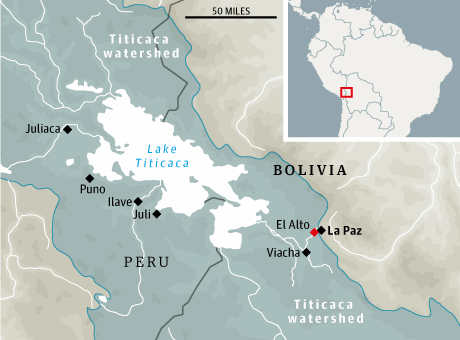
Urban Population Boom Threatens Lake Titicaca by Sara Shahriari

Aymara women cross a bridge of rocks on the shores of Lake Titicaca. The lake's water is increasingly contaminated by rivers that pass through the industrial city of El Alto. Photograph: Noah Friedman-Rudovsky

South America's most famous lake is being polluted by increasing levels of waste from fast-growing cities, according to locals, environmentalists and politicians.

Lake Titicaca, which sits on the border of Bolivia and Peru, has sustained agricultural societies on the dry, high-altitude Andean plains for thousands of years, but is now threatened by a population boom from nearby cities and towns.

El Alto has grown at 4% a year for two decades as rural peasants seek a better life, and is now the country's second largest city and the largest urban centre in the Titicaca watershed.

But this migration has had devastating effects on the rivers of El Alto, communities downstream and Lake Titicaca. Raw sewage, garbage and industrial waste are all dumped into the Seco River, which flows through the heart of El Alto. At the edge of the city, where the Seco begins a 40-mile journey toward Lake Titicaca, it also receives treated wastewater from the city's severely overtaxed treatment plant. Those waters mix and travel out over the flat plains.

Because of its size and history, El Alto is a political powerhouse, yet the chronic poverty and lack of access to services widely faced by Bolivia's indigenous peoples persist there, and tackling pollution is a struggle. Changing the waste disposal habits of the sparsely populated countryside is one obstacle. But at the heart of the matter is weak enforcement of environmental laws and inadequate infrastructure.

"There is no complete and structured treatment of wastewater," said Marco Ribera Arismendi of the Environmental Defense League in La Paz. "The things governments have done so far are like giving an aspirin to someone who has been shot."

Edgar Patana Ticona, El Alto's mayor, says trying to enforce environmental standards in the city is a tough task. "If we monitor a specific business then the people who work there, the owner and all the neighbours begin to protest," he said. "And not so that we enforce the rules - but so the business can continue operating."

El Alto's budget depends on Bolivia's central government, and collects little from local taxes. A constantly expanding network brings drinking water to about 80% of the city's homes, and international funds are helping install more sewers – but the construction of a new plant to treat more wastewater is, at best, years away.
Lake Titicaca graphic 
Read more:

Wednesday, January 4, 2012

Asian Carp Invasion. This dramatic video documents the danger and destruction of an exotic species on the Mississippi and its tributaries. As you will see, boaters are being bloodied and a mighty river is being ruined. Now the carp are headed for the Great Lakes with potentially devastating consequences.
 
Click here to view Part II http://www.youtube.com/watch?v=2ChwJiKKBdA

Can an Architect Save the Great Lakes from Asian Carp? by Mark Boyer

The Great Lakes are facing an invasive species crisis. Asian carp, a group of foreign invaders with no known predators and a voracious appetite, are threatening one of the greatest fresh water resources in the world. Elected officials and the Army Corps of Engineers have failed to act, and the situation is dire. But architect Jeanne Gang sees an opportunity to clean up the river, to improve Chicago's water treatment system, and to revitalize a neighborhood.

Just weeks after becoming the first architect in more than a decade to win a MacArthur genius grant, Gang released a slender book outlining her vision of how to fix the Chicago River. Reverse Effect, which is the result of a yearlong collaboration with the Natural Resources Defense Council, advocates completely separating Lake Michigan from the Mississippi River basin and restoring the natural flow of the Chicago River. Not only would the separation prevent carp and other invasive species from traveling between the Mississippi and the Great Lakes, Gang's proposal would use a physical barrier as a catalyst to reimagine an urban neighborhood and to introduce green infrastructure to Chicago's South Side.

Back when Chicago was the world's hog butcher, animal waste from the stockyards and raw sewage were discharged directly into the Chicago River, creating a serious public health problem. So officials did what anyone with a backed-up toilet would do: they unclogged it and flushed it away. In 1900, work was completed on a 28-mile canal connecting the Chicago and Des Plaines rivers, reversing the flow of the Chicago River, and sending the city's waste down to the Gulf of Mexico. The canal created a vital shipping link between the Great Lakes and the Mississippi, but it also created a passageway for invasive species to travel between the watersheds. Now, the only thing preventing carp from entering the lakes is an electric fence that's both ineffective and expensive.
Read more: 

Sunday, December 25, 2011

Feds List Possible Methods for Blocking Asian Carp

Federal officials said Wednesday they were evaluating dozens of options for stopping Asian carp and other invasive species from crossing between the Great Lakes and Mississippi River systems and doing environmental harm in their new surroundings.

The U.S. Army Corps of Engineers released a report listing more than 90 options for blocking the path of would-be aquatic migrants, including poisoning sections of waterways, installing devices that emit light and sound waves, and inducing genetic changes to prevent organisms from reproducing.
The report did not indicate which controls the Army Corps might prefer or evaluate their effectiveness or potential cost. Project manager Dave Wethington said experts will pare down the "shopping list" to determine which methods are likely to work best. They will accept public comments from Dec. 21 to Feb. 17.

"It's very important that we cover all the possible combinations of technologies," said John Goss, the Obama administration's Asian carp program coordinator.

Among the alternatives is installing barriers or other structures to sever the century-old, man-made link between the two systems near Lake Michigan in the Chicago area. That method is preferred by Michigan, Wisconsin, Minnesota, Ohio and Pennsylvania.

Those states are suing the federal government, demanding quicker action to prevent Asian carp from reaching the Great Lakes, and disrupting their fishing industry by gobbling up plankton needed by other organisms in the food web.

Illinois and Chicago-area business interests say cutting the artificial link would disrupt waterborne commerce and kill jobs.

Goss said an electric barrier network on a shipping canal southwest of Chicago is preventing Asian carp and other fish from swimming northward toward Lake Michigan. No bighead or silver carp — the two Asian species threatening to attack the lakes — have been found beyond the barrier this year, although their genetic material continues to turn up in water samples there. The Army Corps strengthened the barrier's electric pulses this fall.

Still, Goss said the barrier was designed to deter fish and wouldn't necessarily prevent other organisms from getting through. Earlier this year, the Army Corps released a list of 38 other invasive species that pose a risk of slipping between the Great Lakes and the Mississippi, including several types of algae, crustaceans such as the spiny water flea, mollusks and plants.

The Corps also is looking at 18 other waterways from New York to Minnesota that could provide pathways between the two watersheds.

Some of the technologies in Wednesday's report are already in use, including fish and plant poisons and stepped-up harvesting by commercial fishermen. Others are still under development.

Among the possibilities are creating high-velocity waterfalls to block upstream passage, zapping species with ultraviolet light or ultrasound, sucking oxygen from the water or raising its temperature to lethal levels, and using biological repellents or pheromones to lure invaders to places where they could be trapped or killed.

The Army Corps will report to Congress on its findings in late 2015 or early 2016, said Gary O'Keefe, invasive species program manager for the Great Lakes.

Federal officials have said previously the study would be completed in 2015. The possibility of a delay into the next year drew criticism from John Sellek, spokesman for the Michigan attorney general's office.

"They can't even maintain their own snail's pace in fighting a fish," Sellek said.

A spokeswoman for the White House Council on Environmental Quality said the timetable had not changed.

Monday, December 19, 2011

Nitrogen from Humans Pollutes Remote Lakes for More Than a Century

The distinctive signal of human-caused nitrogen going back more than 100 years appears in 25 lakes in temperate (green circles), alpine (blue) and arctic (red) areas of the Northern Hemisphere. Data from two lakes are shown in comparison to a similar signal revealed in the Greenland Ice Sheet (yellow). (Credit: University of Washington)

Nitrogen derived from human activities has polluted lakes throughout the Northern Hemisphere for more than a century and the fingerprint of these changes is evident even in remote lakes located thousands of miles from the nearest city, industrial area or farm.

The findings, published in the journal Science Dec. 16, are based on historical changes in the chemical composition of bottom deposits in 36 lakes using an approach similar to aquatic archeology. More than three quarters of the lakes, ranging from the U.S. Rocky Mountains to northern Europe, showed a distinctive signal of nitrogen released from human activities before the start of the 20th century, said Gordon Holtgrieve, a postdoctoral researcher at University of Washington School of Aquatic and Fishery Sciences and lead author of the report. The UW and a dozen other research institutions contributed to the research.

"When it comes to nitrogen associated with humans, most studies have focused on local and regional effects of pollution and have missed the planetary scale changes," Holtgrieve said. "Our study is the first large-scale synthesis to demonstrate that biologically-active nitrogen associated with human society is being transported in the atmosphere to the most remote ecosystems on the planet."

Burning fossil fuel and using agricultural fertilizers are two key ways humans increase the amount of nitrogen entering the atmosphere. Once in the atmosphere, this nitrogen is distributed by atmospheric currents before being deposited back on Earth in rain and snow, often thousands of miles from the source.

Thursday, December 1, 2011

EPA proposes standards for cleansing ship ballast water, leading pathway for invasive species


The Environmental Protection Agency proposed stricter requirements Wednesday for cleaning ballast water that keeps ships upright in rolling seas but enables invasive species to reach U.S. waters, where they have ravaged ecosystems and caused billions of dollars in economic losses.
The new standards would require commercial vessels to install technology strong enough to kill at least some of the fish, mussels and even microorganisms such as viruses that lurk in ballast water before it’s dumped into harbors after ships arrive in port. Environmentalists whose lawsuits forced the EPA to implement rules in the first place said the new proposal is largely inadequate.

More than 180 exotic species have invaded the Great Lakes, about two-thirds of which are believed to have been carried in ballast water. Among them are zebra and quagga mussels, which have spread across most of the lakes and turned up as far away as California. Ballast water also has brought invaders to ocean coasts, including Asian clams in San Francisco Bay and Japanese shore crabs on the Atlantic seaboard.

Ballast water regulation has been debated in Congress for years but no legislation has passed because of disagreements over how strict the cleanliness standards should be.

The EPA refused for years to set rules for ballast water under the Clean Water Act, but the agency was ordered to do so by federal courts after environmental groups sued. The agency issued an industry-wide permit in 2008 requiring shippers to exchange their millions of gallons of ballast water at sea or, if the tanks were empty, rinse them with salt water before entering U.S. territory. Environmentalists sued again, saying the requirement was too weak.

Friday, November 11, 2011

The Great Lakes Great

Why are the Great Lakes Great?
  • They provide water for 37 million people.
  • They are a source of water for regional agriculture and food production.
  • They provide year round recreation, ranging from fishing, boating, swimming or playing on the beach.
  • They are a powerful economic engine for the eight state, two province region.
Stretching from the shores of Lake Superior, through the waters of Lake Michigan, Huron, Erie and Ontario, and through the banks of the St. Lawrence river, the Great Lakes are one of the natural wonders of the world. The Lakes and their connecting channels contain roughly 18% of the world’s surface freshwater, second only to the polar ice caps!

These freshwater lakes are our most precious natural resource, home to over 37 million people and host to a rich and unique diversity of plants and animals. The Great Lakes’ natural bounty have played a defining role in the region’s history and still support its primary economic activities, including agriculture, industrial manufacturing, steel production, shipping, commercial and sport fisheries, recreation and tourism.


Sunday, November 6, 2011

Help Save Our Beloved Old Lake Bosomtwi-Ghana


Like everything else, while other nations are striving for a uniform set of standards in eradicating all dimensions of pollution and diseases from commercial fish farming even on high seas, Ghana our Motherland copies and follows blindly; even at the expense of losing the one of the natural rainforest lakes in the world.

Yes; although fish farming will provide you with the Tilapia you desire, why do you resort to aquaculture in Lake Bosomtwi as opposed to other channels such as the Volta Lake which has outlets or in ground ponds?


Allowing Fish Farming inside the waters of Lake Bosomtwi will have serious, devastating ramifications on the lake’s ecological system, if not the entire lake basin environment; thus, should be banned with immediate effect by authorities designated to protect our environment.

Read more on GhanaWeb