Showing posts with label Food Shortage. Show all posts

Tuesday, October 16, 2012

Water Scarcity Compounds India’s Food Insecurity

      A woman carries firewood in Gujarat on Aug. 6, 2012, as others rest under a tree after they migrated because of a water shortage. Reuters photo: Ahmad Masood


Since India’s independence, the mammoth task of feeding its hundreds of millions, most of whom are extremely poor, has been a major challenge to policymakers. In the coming decades, the issue of food insecurity is likely to affect almost all Indians. However, for the poorest amongst us, it could be catastrophic. India ranks 65 of 79 countries in the Global Hunger Index. This is extremely alarming.
In the past few years, uneven weather patterns combined with over exploited and depleting water resources in various parts of India have wreaked havoc on food security, particularly for small and marginal farmers, as well as the rural poor.
The recently launched Global Food Security Index (GFSI) estimates that in 2012, there are 224 million Indians, around 19 percent of the total population, who are undernourished. The same report also estimates that while the Indian government has various institutions designed to deal with the impact of inflation on food prices, it only spends 1 percent of agricultural GDP on research to build food security for the poorest. Overall, India ranked 66th on the GFSI. It is estimated that one in four of the world’s malnourished children is in India, more even than in sub-Saharan Africa.
Water insecurity, further exacerbated by climate change, is arguably the most important factor for India’s food security. India’s total water availability per capita is expected to decline to 1,240 cubic metres per person per year by 2030, perilously close to the 1,000 cubic metre benchmark set by the World Bank as ‘water scarce’.
Factors such as increasing usage, poor infrastructure, and pollution have led to a decline of water quantity and quality in India. Climate change, meanwhile, is expected to cause a two-fold impact.
One, increasing temperatures have hastened the rate of melt of the Himalayan glaciers, upon which major Indian rivers like the Ganges, Indus and Brahmaputra depend.
Second, the effect of climate change on monsoons in India will cause them to become more erratic, arriving earlier or later and lasting for shorter, more intense periods of time. India’s farming communities depend overwhelmingly on the monsoon, as their cropping patterns are built around it. The combined effect of climate change and over exploitation is violating the water cycle, degrading aquifers and  eroding ground water resources.
Over 50 percent of agricultural land in India depends entirely on groundwater. In North and Northeast India, where perennial rivers (rivers that have water year round, i.e. glacier fed rivers in India, such as the Ganges) sustain the agricultural land, have to deal with issues such as flooding caused by climate change impacts such as speedier glacier melt and erratic monsoons.
Meanwhile, farmers in states in West and South India, where rivers are seasonal, have to depend heavily on rapidly depleting groundwater resources.
The worst affected by this type of water-fuelled food insecurity are the small farmers of India. Estimates suggest that between 1995 and 2010, over 2,50,000 farmers in India, mostly from states like Andhra Pradesh and Maharashtra, killed themselves. Most of these farmers were drowning in vicious cycles of debt caused by failed monsoons and increasing droughts.
Responses to this crisis, including the National Action Plan on Climate Change, lay out various solutions and intended interventions, but most focus on the long term. To secure the future of India’s water resources vis-à-vis its agriculture in the future, it is important that certain steps be taken immediately. First and foremost, authorities will have to remove the mindset that water is an endless resource and the solution to water woes is simply a further development of India’s fast depleting groundwater.
Indeed, Dr. Mihir Shah, co-Founder, Samaj Pragati Sahayog (SPS) and member of the Planning Commission of India has stated that the ‘era of further water development may be over’ and emphasized that we have to urgently introduce more efficient water management. In this regard, promotion of irrigation efficiency will be crucial in the future.
Systems such as drip irrigation and System of Rice Intensification (SRI) to farmers across India will be essential. It will also be necessary to promote water conservation methods such as rain water harvesting, which has been successful in urban India, in villages as well.
At the same time, reducing inefficiencies and water wastage through conveyance losses will require governmental and NGO support in actions such as replacing faulty pipes and pumps.  Hence, India needs to invest on improving its water productivity, and any capacity to produce more food like rice with less water will be an important contribution to sustainable water and food security.
In short, India is facing a bleak future of becoming water scarce and painfully food insecure. How exactly are the country’s hundreds of millions, who depend entirely on agriculture for their livelihoods, as well as those that depend on agriculture for their food needs, to make ends meet?
Delaying this issue is simply not an option for India as this could lead to increased instability, poor human development and enhance inter-generational poverty. India needs to ensure food security through sustainable development and create resilience amongst the most vulnerable in the country: the poor.


reuters.com


Monday, October 15, 2012

Somaliland: Drought Leaves Nothing Untouched


The village elders are quick to tell me that Boodhlay, the name of this village, means dusty. A quick glance around shows that this name is very apt indeed.
There is hardly any vegetation here at all. No grass, just pockets of dry scrub, spiky acacia trees and dust as far as the eye can see. Unusually for this part of Somaliland, I can't see a single camel.
Almost everyone in the village is a pastoralist. This means that they are largely reliant on their herds of camels, goats and sheep to provide food, milk and income for their families. When there is not enough rain, the pasture soon disappears and people are forced to move in search of food and water for their animals.
"It is affecting every aspect of life"
Yusuf, one of the village elders tells me: "There have been droughts here for a long time now. The situation is very difficult. It is affecting the food and water supply, our incomes and the children's education. It is affecting every aspect of life."
When the drought came last year many people lost animals. In a place where your livestock are your livelihood, some families lost everything.
Recently, the humanitarian situation in Somaliland has modestly improved. The rainy season – known in the region as the Gu rains – was not as meagre as predicted this year. But there are many pockets of land, like Boodhlay, where the rains have been both late and insufficient. In these areas pasture remains extremely limited and water – both for livestock and human consumption – is scarce.
As Yusuf told me: "People think that because we have had some rains recently everything is OK. But they are wrong. Ten days ago it rained for two days. We've had nothing since. These two days of rain will not fix things. It takes a long time to recover. Nothing has changed."
Our response
Unless assistance is provided, these factors could lead to destitution for many of the pastoral communities that call eastern Somaliland home. We're calling for urgent funding to contribute towards sustainable early recovery in these areas.
We have also have launched an emergency intervention to address the lack of water in villages where we are already working, such as Boodhlay.
The Water, Sanitation and Hygiene (WASH) component of our response is already underway, and we're aiming to provide immediate access to safe water for more than 7,000 families. This is being achieved via emergency water trucking, the restoration of water sources (berkads), or a combination of both.
In total we're targeting 21 villages in eastern Somaliland. To date, we've reached 13,557 people, including 6,110 children in the area through our WASH intervention.


In response to 2011's famine in parts of southern Somalia, the United Nations Food and Agriculture Organization (FAO) more than doubled its support to Somali farmers, especially in the cereal producing parts in the country's south.

To restore the crop production capacity, FAO distributed appropriate agricultural inputs (cereal seeds and fertilizers) and provided technical assistance in conservation agriculture. In the cropping season that followed 2011's famine declaration, FAO procured and distributed 3750 tons of Urea and 1300 tons of DAP fertilizer to Somali farmers. Other farm inputs included 135 tonnes of maize seeds, 935 tonnes of sorghum seeds and 120 tonnes of sesame seeds.

Distribution of these inputs is aimed at restoring the productive capacity (and improving food security) of some 150, 000 farming households (equivalent to 900 000 people) in Somalia.

However, 2012 has seen the introduction of tractor hours per beneficiary, through which farmers access tractors to cultivate their land resulted in cultivation of over 1,533hectares of land. Through a creating irrigation scheme, farmers pay money to access water pumps to irrigate their fields. As a result, some 8496 hectares has been irrigated to date.

FAO's agricultural activitiesEuropean Commission, United Kingdom, United States, Australia Aid, The World Bank Belgium, Spain and Italy.

Friday, October 5, 2012

Developing Countries Most Vulnerable To Ocean Acidification


Developing countries that rely on nourishment from the oceans will soon find their sources of food and way of life threatened, according to an Oceana study released last week. The report,Ocean-Based Food Security Threatened in a High CO2 World, ranks the top 50 nations most vulnerable to climate change and ocean acidification in the context of their seafood and fish consumption.
Not surprisingly, those nations topping the list are among the least responsible for historic emissions of carbon dioxide.
The Comoros claimed the dubious distinction of most threatened, followed by Togo, the Cook Islands, Kiribati, and Eritrea. Other notable countries in the top fifty include Pakistan (8), North Korea (25), China (35), and South Africa (46). The United States did not make the list.
Just how big is this threat? Over a billion people rely on seafood as their main source of protein. Before mid-century, global population is expected to reach nine billion, creating further demand for ocean-based food. Many nations struggling with nutrition will be further challenged, and citizens of some developing nations will likely turn to inferior foods. The authors elaborate:
Losing [seafood] may mean more dependence on less healthy processed foods that are imported from abroad. Communities that have recently made a shift from eating traditional seafood items to importing cheap, processed foods have suffered widespread health problems. For example, in Pacific Island nations about 40 percent of the population has been diagnosed with diabetes, cardiovascular diseases or hypertension.
The combined rankings were based on three factors: exposure to climate change and ocean acidification, rates of seafood and fish consumption, and adaptive ability. It then predicted these conditions into mid-century for each country.
The report also considers the impacts of climate change and ocean acidification separately. The Maldives are the most threatened based solely on climate change predictions. The Cook Islands, which did not fare much better in the combined rankings, came in at number one in the ocean acidification rankings.
Scientists have already observed disturbing trends in ocean acidification and climate change. Since the Industrial Revolution, ocean pH has decreased by roughly 30 percent. The change in pH spells serious trouble for coral reefs and shellfish that rely on calcium to grow. In increasingly acidic waters, less calcium is available.
Ocean temperatures are also rising dramatically in numerous regions. This change is forcing some marine species to move closer to the poles or into deeper waters. Many fish species are predicted to shift towards the poles at a rate of around 20 miles per decade. Poorer nations do not possess the industrial fishing fleets to chase these moving populations.
Although the United States didn’t make the list, it isn’t safe from these changes. Atlantic codhave shifted farther north to compensate for increasing temperatures, and lobster populations are becoming increasingly vulnerable to disease as waters warm, wreaking havoc on seafood markets. Oceana stresses the effects climate change may have on American fisheries in its report:
Millions of jobs and billions of dollars in revenue are at risk if there are substantial losses in the capture, processing and sale of U.S. seafood due to regional climate impacts. Due to rising temperatures, the continental U.S. is projected to lose an average of 12 percent of its fisheries catch potential.
According to the Juliet Eilperin of the Washington Post, ocean acidification is also endangering America’s fisheries. Despite not being the sexiest issue, ocean acidification is receiving increased attention as its effects become more pronounced. Eilperin notes that falling pH is putting pressure on America’s shellfish fisheries. In regions like the Alaska and the Chesapeake Bay, hits to seafood and fish harvests are not just a threat to industry, but a threat to culture.
While the U.S. still lacks the political will to make the necessary changes to adapt and slow climate change and ocean acidification, at least we have the technology and economic resources. The nations atop Oceana’s list do not. Their citizens will have little hope if the seafood and fish they have relied on for generations disappear.


Saturday, September 15, 2012

Changing Rainfall Boosts Number of Ethiopians in Need of Food Aid

                                                   In this 2009 file photo, Ethiopian farmers collect wheat in their field in Abay, north of Ethiopia's capital Addis Ababa


Millions of Ethiopians face severe food shortages as a result of the failure of crucial seasonal rains, a problem increasingly linked to climate change.
The Ethiopian government announced last month that 3.7 million of its citizens will require humanitarian assistance between August and December of this year, up from 3.2 million in January. The 16 percent increase follows the failure of the Belg rains, which normally fall between February and May and are essential to the country’s secondary harvest.
The lack of rainfall is being blamed on climate change, with experts saying it is leading to erratic rain patterns and disruption to normal seasonal changes.
Mohamed Ahmed, a farmer in his early 40s, is one of the millions dealing with the consequences of the rainfall changes. He feeds his family of seven by farming a one-hectare (2.5 acre) plot inherited from his father in the village of Doba in the east of the country, 325 km (203 miles) from the capital, Addis Ababa.
But Ahmed’s land has declined in productivity over the past two decades, even as the size of his family has grown.
“Last season (Belg) I (could) barely sow,” the farmer said grimly. “The rain came almost a month later than the usual time. It is sometimes heavy and sometimes light. The yield is not impressive at all.”
Agriculture is the backbone of the Ethiopian economy, employing 62 million people (about three-quarters of the population), ensuring more than 85 percent of the country’s export earnings and contributing 43 percent of GDP, official figures show.
Most parts of Ethiopia have two rainy seasons and one dry period. Long heavy rains from mid-June to mid-September, known as kiremt, enable the main crop growing season, Mehir, which leads to a harvest from October to January.
The shorter and more moderate Belg rains are important for short-cycle crops such as wheat, barley, teff, and pulses, which are harvested in June or July, and for long-cycle cereals such as corn, sorghum and millet.
FARMING MORE LAND
Faced with deepening food insecurity and poverty as a consequence of changing weather conditions, the government has responded by trying to boost agricultural production.
Ethiopia harvested more than 218 million quintals of crops in the most recentMehir season, surpassing the previous season’s production by 13 million quintals and beating government targets by 3 million quintals, according to the government’s Central Statistical Authority. Produce from smallholder farms grew by 7.4 percent compared to the same season last year.  
The increases are due to additional land being put under cultivation, following large-scale resettlement programmes by the government, aimed at relocating farmers to more productive land. The government has not yet produced an official tally of number of people resettled, but unofficial figures give the total as more than 1.5 million over the past five years.  
More than 12.8 million hectares (31.6 million acres) of land are now under cultivation in Ethiopia, almost one million hectares (2.5 million acres) or 8 percent more than in the last Mehir season.
Despite the increased yields, production is still less than 90 percent of the amount required to provide sufficient nutrition to all the population, according to a report issued last year by the Ethiopian Economic Association, a nongovernmental organisation.
Throughout the country, prices for staple foods remain relatively high, and with inflation hovering around 20 percent in July, they are not expected to decrease before the next harvest enters the market, experts say.
The failure of the Belg crop is raising fears of a humanitarian crisis among organisations working to provide drought relief in the country.
In July, the World Food Programme (WHP) forecast a significant drop in long-cycle Mehir crops such as maize and sorghum in many lowland and mid-altitude areas of Ethiopia during the next harvest season, following below-average Belg rainfall. The majority of crops produced in Ethiopia are categorized as long-cycle crops, needing at least six months to grow.
In a speech last month, Abdou Dieng, the WFP’s humanitarian food coordinator in Ethiopia, said that the lateness and weakness of the Belg rains had taken a toll on agricultural production in areas of the central highlands, particularly in the regional states of Southern Nations, Nationalities and People’s Region, central Oromiya, and eastern Amhara.
Pastoralist areas also have been hard hit and “vulnerability remains high due to the lingering impact of last year’s drought emergency,” Dieng said.
Somali and Oromiya are the regional states most affected by food shortages, together accounting for two-thirds of those seeking relief assistance.
While the Belg harvest accounts for no more than 10 percent of the country’s total annual grain production, it may provide up to 50 percent of the yearly food supply in some highland areas, such as Wollo and Shewa regions, experts say.
PASTORALISTS AFFECTED
The Belg rains are also the main annual rains for the pastoral and agro-pastoral areas of southern and south-eastern Ethiopia, where they supply critical pasture and water for livestock. Even in regions where the rains do not irrigate an extra harvest, they are still crucial for seed-bed preparation for Mehir crops.
The failure of the Belg crop ironically comes at a time of strong economic growth for Ethiopia. Speaking at a national workshop for disaster reduction last year, the state minister of agriculture, Sileshi Getahun, cautioned that the country’s growth rate of 11 percent for the past seven years was vulnerable to changes in the climate.
“While we are proud of this achievement and realize the benefits, we are also aware of how much natural disasters can hinder growth,” Getahun said. “These disasters are becoming more regular and pronounced in terms of frequency, intensity, and coverage due to climate change.”


By Pawlos Belete@trust.org/alertnet

Tuesday, September 11, 2012

A Tree Grows in the Sahel


Fighting back the desert with the zai holes of Yacouba Sawadogo

Around 1980, Yacouba Sawadogo, a farmer in the parched Yatenga region of Burkina Faso, started experimenting with the ancient local tradition of “zai holes” or planting pits, as a way of restoring limited fertility to utterly degraded land. He increased their dimensions to about 10 inches wide and 8 inches deep and stuffed them full of organic fertilizer such as manure and crop residues.
The manure attracted termites, which dug tunnels that helped break up the soil, allowing rainfall to flow through the ground and collect in the zai basin. The result, according to researchers who have studied the spread of zai hole planting practices throughout the region, has been extraordinary. Hundreds of thousands of hectares of semi-arid land that could no longer be cultivated have been restored to productive use.
Sawadogo’s initial plan was to reclaim land for sorghum cultivation. But he discovered that tree seeds tended to end up germinating in the zai holes, and over time, he and other Burkina Faso farmers have begun a slow but steady process of successful reforestation.
The practice has spread throughout the Sahel region of West Africa, helped along by the Association for the Promotion of Zai, founded by Sawadogo, and development NGOs that support “farmer managed natural regeneration” agricultural methods. At a symposium in Nigerlast week sponsored by the International Crops Research Institute for the Semi-Arid Tropics, Chris Reij, a Dutch expert in West Africa who has spent the last 25 years working in the region, presented the results of astonishing levels of reforestation in Niger: Some 3 million hectares of “degraded semi-arid land in Niger have been rehabilitated by farmers on their own initiative.” (Thanks to SciDev.Net for the tip.) Farmers have been digging zai holes to puncture through the desert crust, planting trees, and bit by bit, reclaiming land once considered lost for good. Continue>>>

Thursday, September 6, 2012

What The Drought Of 2012 Tells Us About Industrial Agriculture

I grew up on farms in Iowa and Wisconsin, surrounded by a family of farmers and agricultural workers, all of whom grew corn. I have never heard any farmer say, “Wow, we got the perfect amount of rain this year.” It’s never perfect, and farming is a tough business. There have been droughts before, and it looks like there will certainly be more droughts in the future. However, the summer of 2012 has been historic in several ways:

● July was the all-time warmest month on record in the United States.
● Corn yields are predicted to be the lowest in 17 years.
● Corn futures touched a record high of $8.49 a bushel on August 10.
● July saw a 17-cent jump in the national average gasoline price--the biggest increase for that month on record.
● The United Nations Food and Agriculture Organization reported the largest monthly jump in its cereal price index, up 38 points (17%) from June and only 14 points below its all-time high registered in April 2008.

So what’s the difference between 2012 and other years of drought?


For one, this summer has seen record-breaking heat and dryness, especially in America’s breadbasket. The drought came at a particularly bad moment in the corn growing cycle, resulting in a crop that is likely to be diminished by around 23% this year. This decrease in supply of course increases demand, increasing the price of corn, which gets passed along to industries that use corn (mainly ethanol producers and livestock and dairy farmers). Along with retailers, affected farmers and manufacturers absorb as much of the price as possible before they must pass the cost along to consumers in an already struggling economy. (See projected prices in the graphic.)
A second major difference is the amount of corn we grow for ethanol these days. There is a huge debate over the current ethanol mandate that I aim (rather optimistically) to steer clear of in this post. But when a drought knocks out 23% of the harvest, that deficit has to come from somewhere. The current federal renewable-fuel standards require 13.2 billion gallons of corn ethanol to be blended with gasoline this year. That takes 4.7 billion bushels of corn. In a year where 10.7 billion bushels is an optimistic estimate for the total national corn crop, that means nearly 44% of this year’s corn harvest Read more + Additional infographics.

Oxfam-Climate Threat to World's Poor is Underestimated


Climate change may pose a much more serious threat to the world's poor than existing research has suggested because of spikes in food prices as extreme weather becomes more common, Oxfam said on Wednesday.

More frequent extreme weather events will create shortages, destabilise markets and precipitate price spikes on top of projected structural price rises of about 100 percent for staples such as maize over the next 20 years, the charity said in a report.

Droughts in the U.S. Midwest and Russia this year have helped to propel prices for maize and soybeans to record highs and United Nations food agencies this week said that world leaders must take swift action to ensure that food-price shocks do not turn into a catastrophe that could hurt tens of millions of people.

The UN's Food and Agriculture Organization has estimated that the 2007/08 price spike contributed to an 8 percent rise in the number of undernourished people in Africa.

"For vulnerable people, sudden and extreme price hikes can be more devastating than gradual long-term rises to which they may have more chance of adjusting," Oxfam said in a report.

"Though the price spike and coping strategies may be short-term, the impacts are often felt across generations. An increase in malnutrition can cause stunting and reduce developmental potential in young children."

Oxfam added that existing research, which considers the gradual effects of climate change but not extreme weather, significantly underestimates the implications of changing weather patterns.

The charity insisted there is an "urgent need for a full stress test of our fragile and dysfunctional food system" and called for a reversal of decades of underinvestment in small-scale sustainable and resilient agriculture, as well as urgent action to reduce greenhouse gas emissions.

"Climate change could lead to a permanent increase in yield variability and excessive food price volatility, however, which could leave many poor countries with potentially insuperable food security challenges," Oxfam said.


Wednesday, September 5, 2012

Crops in India Wilt in a Weak Monsoon Season

                                                                   Dying young cotton plants in a field southeast of Aurangabad, India.

Vilas Dinkar Mukane lives halfway around the world from the corn farmers of Iowa, but the Indian sharecropper is at risk of losing his livelihood for the same reason: not enough rain.


With the nourishing downpours of the annual monsoon season down an average of 12 percent across India and much more in some regions, farmers in this village about 250 miles east of Mumbai are on the brink of disaster. “If this situation continues, I’ll lose everything,” said Mr. Mukane, whose soybean, sugarcane and cotton crops were visibly stunted and wilting in his fields recently. “Nothing can happen without water.”
Drought has devastated crops around the world this year, including corn and soybeans in the United States, wheat in Russia and Australia and soybeans in Brazil and Argentina. This has contributed to a 6 percent rise in global food prices from June to July, according to United Nations data.
India is experiencing its fourth drought in a dozen years, raising concerns about the reliability of the country’s primary source of fresh water, the monsoon rains that typically fall from June to October.
Some scientists warn that such calamities are part of a trend that is likely to intensify in the coming decades because of climate changes caused by the human release of greenhouse gases.
A paper published last month blamed global warming for a large increase in the percentage of the planet affected by extreme summer heat in the last several decades. And the World Meteorological Organization, a division of the United Nations, recently warnedthat climate change was “projected to increase the frequency, intensity and duration of droughts, with impacts on many sectors, in particular food, water and energy.”
Scientists say that in addition to increasing temperatures, climate change appears to be making India and its neighbors Pakistan, Sri Lanka and Bangladesh more vulnerable to erratic monsoons.
Studies using 130 years of data show big changes in rainfall in recent decades, said B. N. Goswami, director of the Indian Institute of Tropical Meteorology, a government-backed research organization. Climate models suggest that while overall rainfall should increase in the coming decades, the region can expect longer dry spells and more intense downpours — forces that would seem to cancel each other out but in fact pose new threats.
“Heavy rains are normally short duration, and therefore the water runs off,” said Dr. Goswami, who added that more research was needed to fully understand the impact of climate change on monsoons. “Weak rains are important for recharging groundwater.”
India is more vulnerable to disruption from drought than countries like the United States. While agriculture accounts for just 15 percent of India’s economy, half of its 1.2 billion people work on farms, and many of its poorest citizens already cannot afford enough food after price increases of 10 percent or more in the last couple of years.
“These kinds of rainfall failures have a lot of human effects,” said Yoginder K. Alagh, chairman of the Institute of Rural Management and a former Indian minister. “A large number of people don’t get employment. There are acute drinking water problems.”
Food grain and oilseed production in India could fall up to 12 percent this year as a result of poor rain, said P. K. Joshi, director for South Asia at the International Food Policy Research Institute.
The good news is that the drought is not likely to result in widespread famine. India has more than 76 million tons of wheat, rice and other grain in storage, in part because of government support for those crops and an export ban put in place in 2008 when global food prices shot up. But analysts expect prices for dairy, meat, lentils and vegetables to rise.
Unlike the United States, where crop insurance and other government programs provide a safety net for farmers, India offers ad hoc and unpredictable government support, increasing the risk that legions of farmers will be wiped out.
If it does not rain soon, Mr. Mukane, 25, who works a field here in Muruma, said he would have to sell whatever he could to repay banks and lenders 500,000 rupees (about $9,000), much of it borrowed at an interest rate of 7 percent a month.
Weak monsoon rains were also an underlying cause of the blackouts that cut power to half of the country in July. The paucity of water lowered the supply of power from dams that account for a fifth of electric capacity, even as consumers cranked up fans and air-conditioners and farmers ran electric pumps to draw water from wells. read more@nytimes.com

Drought and Other Extreme Weather Events Trigger Another Global Food Crisis?


The impact of the 2012 drought on U.S. crops and livestock has been in the headlines for weeks now. Last month, the United Nations Food and Agriculture Organization (FAO) released itsmonthly food price index, showing a sharp increase of 6 percent in July, which raises serious concerns that we might be on the brink of a global food crisis.
In an era of globalized commodity markets, the devastation of the U.S. corn crop translates into a global grain shortage. But, equally important, the U.S. drought is just one of many extreme weather events around the world this year and their combined “domino” effect could put many at risk of higher food prices, if not a full-on food crisis.
A global grain shortage
We are just at the front end of feeling the impacts of the drought. The harvest season has yet to unfold across much of the U.S., the final tally of lost crops is not yet in, and drought conditions persist in much of the country. The most recent USDA weekly crop progress report is not promising: 50 percent of the corn crop and 39 percent of soybean is in poor or very poor shape. The sorghum crop has also been hit hard with 45 percent in poor or very poor shape.
The U.S. is one of the largest producers and exporters of corn (also called maize), contributing 38 percent to world output and responsible for nearly half of global corn exports. Simultaneous with corn losses, global wheat output has been affected by drought and dry, hot conditions in Australia and Russia, both major wheat producers and exporters. The price of wheat (and some other grains) has also gone up because people are looking for ways to substitute away from corn.
The effects on corn, soybean, and wheat prices has been clear. According to the latest data from the Chicago Board of Trade, corn has risen 61 percent since June to $8.2675 per bushel, soybeans rose 20 percent to $16.2675 a bushel, and wheat prices rose to $9.2725 a bushel which is a more than 40 percent increase this year.
Livestock and dairy production lowered
Higher corn prices are also negatively affecting the livestock industry since corn is major source of feed. The price of hay has also doubled in some areas. Additionally, the drought has left 59 percent of pasture and rangeland land in poor or very poor condition. Many cattle farmers are culling their herds. This short-term response may lead to a temporary glut in the meat market but that will taper off within months. Over the longer term, into next year, we can expect rising meat and poultry prices, reflecting the increased cost of feed and smaller herds.
The extreme heat that has baked much of the country this summer has also led to lower milk production and lower weight gain among animals. According to a recent news article quoting Jim Fraley of the Illinois Milk Producers Association, in Illinois cows normally give 90 pounds of milk per cow per day but now production is down to around 60 pounds. read more@triplepundit.com

Sunday, September 2, 2012

Food Shortages Could Force World into Vegetarianism


Leading water scientists have issued one of the sternest warnings yet about global food supplies, saying that the world's population may have to switch almost completely to a vegetarian diet over the next 40 years to avoid catastrophic shortages.
Humans derive about 20% of their protein from animal-based products now, but this may need to drop to just 5% to feed the extra 2 billion people expected to be alive by 2050, according to research by some of the world's leading water scientists.
"There will not be enough water available on current croplands to produce food for the expected 9 billion population in 2050 if we follow current trends and changes towards diets common in western nations," the report by Malik Falkenmark and colleagues at the Stockholm International Water Institute (SIWI) said.
"There will be just enough water if the proportion of animal-based foods is limited to 5% of total calories and considerable regional water deficits can be met by a … reliable system of food trade."
Dire warnings of water scarcity limiting food production come as Oxfam and the UN prepare for a possible second global food crisis in five years. Prices for staples such as corn and wheat have risen nearly 50% on international markets since June, triggered by severe droughts in the US and Russia, and weak monsoon rains in Asia. More than 18 million people are already facing serious food shortages across the Sahel.
Oxfam has forecast that the price spike will have a devastating impact in developing countries that rely heavily on food imports, including parts of Latin America, North Africa and the Middle East. Food shortages in 2008 led to civil unrest in 28 countries.
Adopting a vegetarian diet is one option to increase the amount of water available to grow more food in an increasingly climate-erratic world, the scientists said. Animal protein-rich food consumes five to 10 times more water than a vegetarian diet. One third of the world's arable land is used to grow crops to feed animals. Other options to feed people include eliminating waste and increasing trade between countries in food surplus and those in deficit.
"Nine hundred million people already go hungry and 2 billion people are malnourished in spite of the fact that per capita food production continues to increase," they said. "With 70% of all available water being in agriculture, growing more food to feed an additional 2 billion people by 2050 will place greater pressure on available water and land."
The report is being released at the start of the annual world water conference in Stockholm, Sweden, where 2,500 politicians, UN bodies, non-governmental groups and researchers from 120 countries meet to address global water supply problems.
Competition for water between food production and other uses will intensify pressure on essential resources, the scientists said. "The UN predicts that we must increase food production by 70% by mid-century. This will place additional pressure on our already stressed water resources, at a time when we also need to allocate more water to satisfy global energy demand – which is expected to rise 60% over the coming 30 years – and to generate electricity for the 1.3 billion people currently without it," said the report.
Overeating, undernourishment and waste are all on the rise and increased food production may face future constraints from water scarcity.
"We will need a new recipe to feed the world in the future," said the report's editor, Anders Jägerskog.
A separate report from the International Water Management Institute(IWMI) said the best way for countries to protect millions of farmers from food insecurity in sub-Saharan Africa and south Asia was to help them invest in small pumps and simple technology, rather than to develop expensive, large-scale irrigation projects.
"We've witnessed again and again what happens to the world's poor – the majority of whom depend on agriculture for their livelihoods and already suffer from water scarcity – when they are at the mercy of our fragile global food system," said Dr Colin Chartres, the director general.
"Farmers across the developing world are increasingly relying on and benefiting from small-scale, locally-relevant water solutions. [These] techniques could increase yields up to 300% and add tens of billions of US dollars to household revenues across sub-Saharan Africa and south Asia."


Friday, August 31, 2012

Access to Water Resources Key for Food Security


Recurring droughts highlight need to better manage water resources and safeguard food security. Ongoing worldwide drought has hurt global grain production and contributed to food price spikes every other year since 2007.
One of the key messages that FAO is transmitting this week at World Water Week in Stockholm, Sweden is that water use and water waste must be used wise throughout the entire food chain. World Water Week is the annual event which brings policy makers and experts from around the globe together to discuss pressing issues related to water and its management.
FAO’s recent report,The State of Land and Water Resources for Food and Agriculture, warns that water scarcity and pollution are posing a growing risk to key food production systems around the world.
Agriculture, as we practice it today, is one of the causes of this phenomenon, as it represents 70% of all freshwater uses.” Jose Graziano da Silva, FAO Director-General (whole statement)
Agriculture is the largest consumer of freshwater by far – about 70% of all freshwater withdrawals go to irrigated agriculture. Today, irrigated agriculture covers 275 million hectares – about 20% of cultivated land – and accounts for 40% of global food production. With rapid population growth, water withdrawals have tripled over the last 50 years.

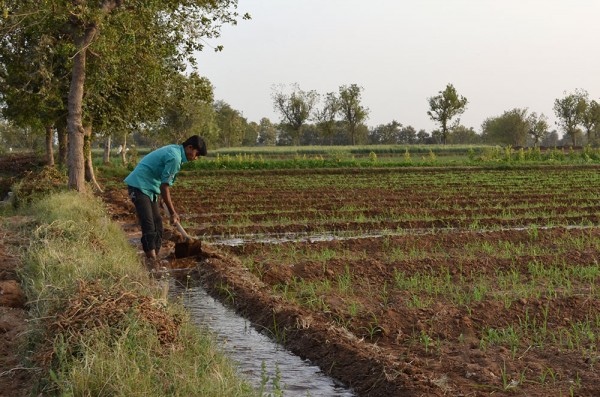
Flood irrigation in India. More efficient use of water for agriculture is key to protecting and conserving water supplies.(Credit: Jeremy Hinsdale)
To meet the world’s growing demand for food, people need to produce in a way that conserves water, use it more sustainably and intelligently, and helps agriculture adapt to climate change.
Reducing food wastage by 50% – including post-harvest losses, losses in transport and handling, and losses in the household – might vastly reduce or even negate the need for additional water to grow more food, which will ensure sufficient water is available for food in the future.
As irrigation systems come under pressure to produce more with less water, there is a danger that unequal rights and entitlements will widen inequalities. Irrigation is very important for overall food production by enabling 40% of the production on only 17% of the cropland.

© Water Footprint Network

Toward that end, FAO is proposing a new framework for water management in agriculture: Coping with water scarcity: An action framework for agriculture and food security.


New framework for water management in agriculture

Toward that end, FAO is proposing a new framework for water management in agriculture: Coping with water scarcity: An action framework for agriculture and food security.

FAO’s framework stresses in particular the importance of the following areas where policy and action should focus:
Modernisation of irrigation: age-old canal irrigation schemes need to be modernized to respond to the needs of tomorrow’s farmers, allow for the more efficient use of water and increase productivity. Future irrigation will increasingly be piped irrigation and combine different sources of water, including groundwater, in a sustainable way.

Better storage of rainwater at farm level:
 by storing water in small ponds or directly in the ground, farmers can reduce drought-related risks and increase productivity.

Recycling and re-using:
 water re-use, in particular treated wastewater from urban centers, can play an important role for agricultural production in arid areas. A more systematic way of safely using such water can boost local production.

Pollution control:
 better water quality regulations, together with effective enforcement mechanisms, needs to be put in place to reduce water pollution, which aggravates water scarcity.
Substitution and reduction of food waste: agricultural policies must consider the potential that rainfed production still offers in many places, and seek a much more integrated combination of irrigated and rainfed farming.

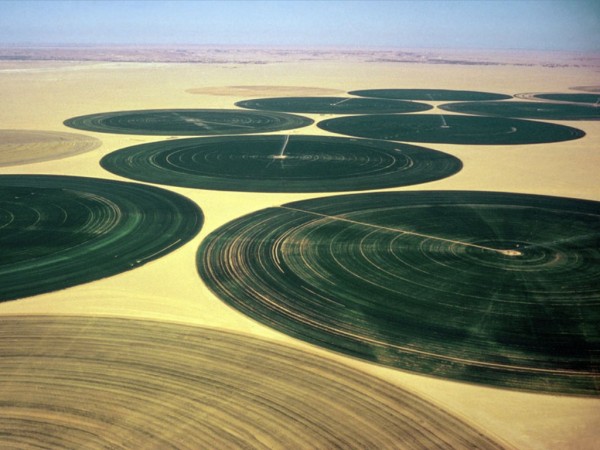
Irrigated fields Kufra in Sahara (Credit: InformedFarmer)
At the same time, the reduction of post-harvest losses must be part of any water scarcity coping strategy. Of all food produced globally, 30 percent – the equivalent of 1.3 billion tons - is lost or wasted every year along the value chain from field to fork. Reducing these losses go a long way towards reducing pressuring on natural resources that are essential to food production, like soils and water.
WE MUST KNOW THIS:
The world’s water crisis is not related to the physical availability of water, but to unbalanced power relations, poverty and related inequalities.