Showing posts with label Florida Water. Show all posts

Wednesday, September 12, 2012

Water Woes

Water problems are everywhere. This post is from my hometown newspaper The Lake City Reporter


A restoration plan for Columbia County’s Ichetucknee Springs says officials charged with managing area water don’t have enough information to be effective and the regulatory process used by the agency responsible for water quality is too slow.

The plan also recommends actions by local officials and organizations as well as the Florida Legislature.

The Ichetucknee Springs Restoration Plan was released Tuesday by the Howard T. Odum Florida Springs Institute. Dr. Robert Knight, director of the Florida Springs Institute and a University of Florida professor, compiled the report.


Agricultural and urban development pressures are causing water pollution, declining groundwater levels and lower average spring flows, according to the plan.

“The springs will stop flowing in 20 years at the rate we are going,” Knight said. “There are ways to stop these problems without stopping economic growth.”

In 2010, the Florida Department of Environmental Protection (FDEP) funded a three-year project to write a restoration plan. The Ichetucknee Springs Working Group and a consulting firm developed a draft of the restoration plan, but because of state funding cuts, the working group dismantled in June 2011. The Florida Springs Institute volunteered to complete the final report.

Knight will explain the science behind water Friday during the free, multi-media event Our Water, Our Future at the Florida Gateway College Performing Arts Center from 7 to 9 p.m. Springs photographer John Moran will also have a presentation.

Side effects

The most noticeable side effects of the deteriorating springs is the increase in algae and the dominance of eel grass, Knight said. “Algae is not attractive in anyone’s book,” he said, and it has repercussions for the springs’ plants and animals. Divers can see a change in water clarity and color, he said.

Two types of eel grass have replaced the seven dominant plants species once found in the springs and river. The next step is almost complete dominance of algae, Knight said.

The Ichetucknee is not as degraded as many other springs across the state. It could be worse.

“It’s somewhere in the middle right now,” he said. “It’s not dead. I’d say it’s getting ready to go to the emergency room. That’s why I’m raising the alarm,” Knight said.

Available research

The Ichetucknee is not the best or the worst studied spring, Knight said. “There’s a lot of gaps in the data we have,” he said. Research is funded periodically by various groups, Knight said.

Turtles have been studied twice. Fish populations are measured periodically and yearly bird counts began recently, he said.

Scientists have good data on flows from the springs, but water quality data is periodic and sloppy, he said.

The changes occurring in the Ichetucknee are not in compliance with current laws, Knight said.

Restoration goals

The 103-page report is “based on best available science and is intended to provide a foundation and preliminary blueprint for immediate and continuing actions” needed to restore and protect the Ichetucknee System. The plan lists eight goals with specific actions and the entity Knight labels as responsible.

The Florida Legislature and the Florida Park Service are responsible for the overall springs protection, according to the report.

Lawmakers can establish stricter groundwater nitrate standards, adequately fund the FDEP and require complete minimum flows and levels for bodies of water before water use permits are issued, the plan says.

The park service can define the human carrying capacity, especially near sensitive spring areas, like Blue Hole.

The Suwannee River Water Management District (SRWMD) is responsible for restoring spring flows and must establish minimum levels for environmental needs, according to the report. How much groundwater is actually available for human and environmental needs is not available to the district’s governing board, the report says.

The district should require agricultural water-use metering and set a timeline for overall groundwater pumping reductions to return spring flows, the report says.

The SRWMD is also responsible for groundwater assessment and should create a database with all existing wells to estimate pumping rates and historic levels.

Florida Leaders Organized for Water, the consortium of local governments, should implement strong conservation measures, according to the report. FLOW should ask Suwannee River and St. Johns water management districts for a Regional Sustainable Groundwater Yield and strict water conservation programs, Knight said.

Columbia County, the Florida Department of Agriculture and Consumer Services and the FDEP are agencies responsible for restoring water quality, the plan says.

The county should use its taxing and zoning authority to protect the springs by establishing Aquifer Protection Zones and discouraging residential lawn fertilization.

FDACS should draft legislation that provides incentives for conversion to crops requiring little or no fertilizer and animal operations cutting their nitrogen discharge. New livestock operations should be prohibited near area springs.

FDEP should phase in advanced nitrogen removal at all wastewater treatment plants. FDEP should also work to implement the Basin Management Action Plan, which would reduce pollutants, on an accelerated schedule. FDEP should also study the feasibility of cluster sewage collection for high-density areas in the Ichetucknee Springshed, the plan said.

A program of SRWMD and FDACS, the Suwannee River Partnership is responsible for reducing agricultural impacts. The partnership should work with agricultural producers to implement best management practices and grow crops that require less groundwater and nitrogen fertilizer, the restoration plan says.

Nonprofit, The Ichetucknee Partnership and local media outlets are responsible for effective communication, according to the plan. TIP should lead the implementation of the restoration goals and fund Springs Health Report Cards, published reports on spring health, Knight said. Local media should report the improving or declining health of the springs.

Nonprofit, federal and state environmental organizations, such as the Florida Springs Institute, Four Rivers Audubon, Three Rivers Trust and the U.S. Geological Survey, are responsible for documenting spring health, the plan says. The groups and agencies can implement ecological monitoring programs and expand water quality and biological sampling for the springs. After monitoring, they can prepare bi-annual Springs Health Report Cards.

With less reliance on groundwater and less fertilizer in the area, the springs can come back, Knight said.

“A phased plan to cut back on consumptive uses of groundwater within and outside of the Ichetucknee Springshed as well as restoration of natural drainage and water storage patterns in wetlands and streams will be needed to restore spring and river flows,” according to the plan.

Fertilization and wastewater disposal practices also need to be updated for more efficient technologies to reduce the load of nitrate reaching the aquifer, according to the report.

More technical information is needed to understand flow reductions, sources of increased nitrogen loads and their effects on the health of the Ichetucknee, the report said.

The plan also calls for educating the public as well as local, state and federal leaders on the importance of restoring the Ichetucknee System and its natural biodiversity.

Economic impact

Florida state parks have a $950 million impact on local economies, according to the report. A 2002 study estimated visitors to Ichetucknee Springs State Park spent $23 million a year, about $34 per visitor. About 90 percent of the visitors were from outside Columbia and Suwannee counties.

Birds, fish and other wildlife depend on the Ichetucknee, but their value is hard to measure. “The value of these natural resources/living plants and animals is not easily measured in terms of dollars but is priceless to natural environment and many of the people who regularly visit the Ichetucknee River and its springs and those who breathe the local air and drink from its waters,” the report said.

Reactions

“The district is working to accomplish much of what the restoration plan recommends through our water use permitting and data monitoring programs, minimum flows and levels development, and water supply assessment and planning efforts,” the SRWMD said in a statement Friday.

In addition, the district recently received a grant of nearly $1 million from the FDEP to implement water quality and quantity improvements in the Santa Fe Basin, which includes the Ichetucknee river and springs, the statement said.

Through the program, the district will work in coordination with the Florida Department of Agriculture and Consumer Services and the Suwannee River Partnership to fund retrofits to existing irrigation systems for area farmers. This work will prevent more than 1 million pounds of nitrogen annually from entering the Santa Fe River Basin and save 670 million gallons per year of water use.

“These efforts will equip irrigation systems to deliver a more uniform and efficient application of water and fertilizer and reduce water use and the potential for nutrients to leach into the water table,” said District Assistant Executive Director Charlie Houder.

FDEP has adopted a Basin Management Action Plan, a five-year blueprint for reducing nutrients in the Santa Fe Basin. The district will cooperate in the plan’s implementation, the statement said.

“The one thing that I’m sure of is, we’ve got to do something,” said Fort White environmentalist Loye Barnard.

Knight is a knowledgeable voice speaking on the front line, she said.

Barnard said the public and elected officials need to see the information. “We have to know that we will lose so much if we don’t protect the springs,” she said.

Although the Florida Springs Institute has no authority to enforce the plan, Knight said he will present it to local officials and groups to encourage action. “I’m going to spread the message as far as I can,” he said.

A 20-page summary of the plan will be available this month to help more people understand the issues. The full report is available at floridaspringsinstitute.org.


By LAURA HAMPSON@lakecityreporter.com

Friday, February 10, 2012

Army Corps Announcement Could Bode Well for Endangered Everglades Species by Virginia Chamlee


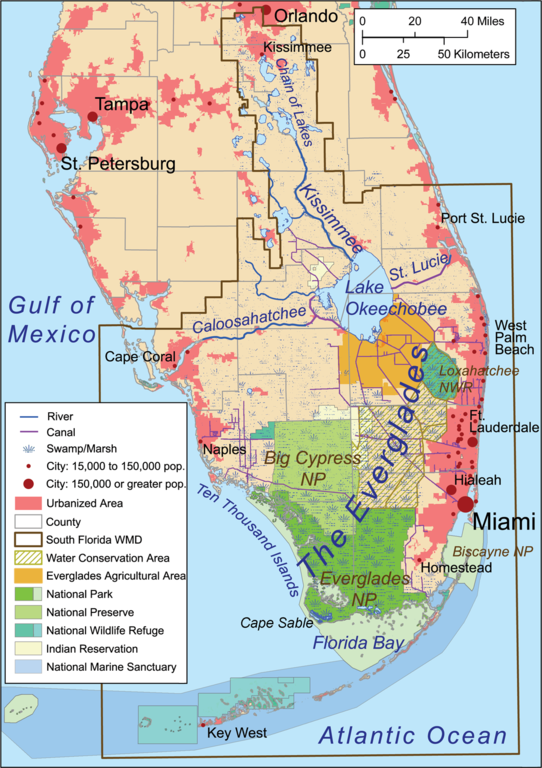
The Army Corps of Engineers on Wednesday approved a South Florida Water Management District request for authorization to use temporary forward pumps to pull water from Lake Okeechobee lower than gravity-flow will allow, and now, the Corps has agreed to reduce that permit extension to one year only, in part to allow for a thorough analysis of the impacts of the pumps on the endangered Everglades snail kite. The announcement is an important one for the environmental group Audubon of Florida, which has long fought for the snail kite habitat.

The health of the snail kite is known to be indicative of the overall health of the Everglades system. Because the species’ diet consists almost solely of apple snails, the survival of the snail kite depends directly on the hydrology and water quality of the watersheds near which they live. Water conservation measures are imperative in order to comprehensively protect not only the kite habitat, but the greater Everglades ecosystem as a whole.


According to the National Park Service, the range of the Florida population of snail kites is restricted to watersheds in the central and southern part of the state. The species was listed as endangered in 1967.


“With three severe droughts hitting Lake Okeechobee in less than a decade, it is crucial for state and federal agencies to look closely at impacts of low water levels on the Everglade Snail Kite,” Everglades Policy Associate Jane Graham said in a press release sent out Thursday afternoon. “The Corps’ decision to renew the permit pending an evaluation of the impact of forward pumps on Lake ecology is an encouraging step in the right direction.”

Audubon of Florida Executive Director Eric Draper said that regulatory agencies (like the South Florida Water Management District) need to “rethink how water from Lake Okeechobee is being used throughout the year to put the environment on par with the sugar industry and other users.”

Monday, January 30, 2012

Florida Water Issues Bubbling Up to the Surface for 2012 Session

As the 2012 legislative session approaches, it is becoming quite clear that water quality and supply issues will be the focus of much attention by the Florida Legislature.  Almost immediately after the close of the 2011 session, various interest groups began meeting to discuss  water-related issues.  A number of bills relating to water have been filed, and there has been significant activity by Agriculture Commissioner Adam Putnam, Attorney General Pam Bondi, and Gov. Rick Scott, mostly related to the federally imposed numeric nutrient criteria.

Numeric Nutrient Limit Criteria
The U.S.Environmental Protection Agency prompted a huge outcry from local governments, utilities, agriculture and  industry  in  August  2009  when it agreed to propose water-pollution limits  known  as  “numeric nutrient criteria” to  settle  a lawsuit  filed by environmental groups.  Those groups had contended that Florida’s existing rules are too vague and fail to prevent waterways from becoming polluted.

Since the EPA announced the imposition of the numeric nutrient criteria, there has been a concerted effort to get the agency to back down and let the State of Florida adopt and implement criteria that are based on sound science and Florida-specific conditions.These efforts have included lawsuits (one by the Florida League of Cities), numerous public  hearings,  and an effort during the 2011 session to enact legislation that  would bypass the EPA efforts.

On November  2, acting EPA Assistant  Administrator Nancy  Stoner  sent  a letter to Florida Department of Environmental Protection (DEP) Secretary Herschel  Vinyard  that  contained both good  news and  bad  news in the fight against  the EPA-imposed  numeric nutrient criteria.The EPA letter expresses support for the DEP’s rulemaking on numeric nutrient criteria. However, that support comes with a number of strings attached, the most troubling of which is an indication that any changes to the draft rule will likely result in the EPA withdrawing its support for the rule.

Before taking effect in Florida, there are many procedural stops for the proposed rule – including approval by the Environmental Regulatory Commission and legislative ratification. Because of these “strings,” support for the DEP rule is far from unanimous, with some members of the regulated community supportive and others strongly  opposed.  The environmental community has been largely critical of  the DEP-proposed rule, claiming it is difficult to enforce and may represent a setback for water quality protection.

On November 3, the Environmental Regulatory Commission held a public hearing on the proposed DEP rules that would replace the controversial federal rules.The proposed rules will be considered at a December  8 commission meeting for final adoption and subsequently offered to the Legislature for ratification during its 2012 session.

Some of the issues raised during the Environmental Regulatory Commission public hearing included concerns that  if the DEP rule does not change, the EPA might approve the rule.The letter from the EPA never unequivocally states that it will approve the DEP rule.  As drafted, the letter suggests that the EPA might not approve the DEP rule even if it does not change. 

Another  area  of concern  raised  by the public is that the EPA never agrees to rescind its January  2009  necessity determination that  numeric  nutrient criteria limits  are  appropriate for Florida.  Instead, the EPA will apply recently finalized federal criteria and continue to promulgate criteria to any  waters that are not covered by the DEP rule.  In other words, South Florida canals, tidal creeks, intermittent streams and estuaries not covered by the DEP rule will be subject to federal numeric criteria unless the DEP promulgates numeric criteria for those water bodies.

The EPA likewise never agrees to seek a dissolution of the 2009 consent decree with EarthJustice. (That consent decree was the genesis of the EPA action to implement numeric nutrient criteriain Florida.) To the contrary, the EPA is committed to following through with its own rulemaking, though the schedule may be contingent on the state’s actions.

Other  issues  include  concerns  by the  EPA that  the  science behind  the DEP biological confirmation approach may fall short of being adequately protective  of designated  uses, as well as questions about  how the DEP plans toapply the numeric  nutrient criteria to canals, drainage ditches and stormwater conveyances in Florida. The EPA letter declares that it will apply federal criteria to these water bodies if the state does not include them in its rule.
continue>>>>

Saturday, January 28, 2012

South Florida Counties Prepare for Sea Level Rise

With so much of Florida barely above sea level, even a small change in sea level has the potential to impact Florida’s population.


Much of Florida’s agriculture depends on canals to drain storm runoff and unusually high tides. Unfortunately, in recent years, more and more storms and tides have been overwhelming the canals.

Similarly, beachfront cities need higher seawalls and improvements in their municipal drainage systems. Freshwater aquifers need protecting from saltwater intrusion or cities need to drill wells further inland to supply people with drinking water.


The four counties – Miami, Broward, Miami-Dade, and Palm Beach – are working together for regional solutions under the Southeast Florida Regional Climate Change Compact. Canals need to be updated the length of the system, rather than just a small area. Aquifers are another feature that crosses county lines.


Working together, the members of the Compact are effecting change across a wide region that will help agriculture, industry, and tourism adapt to an uncertain future.
Blue Living Ideas 

Florida's Water Into Land

For much of Florida's modern history, developers have been turning water into land — draining and filling swamps and marshes to build subdivisions and shopping centers.

Now the Florida Legislature seems ready to try a new trick: turning public waters into private lands.

What legally defines public and private ownership along thousands of miles of navigable rivers and lakes in Florida is something called the “ordinary high water” mark. Basically it means that all land that's submerged during the “high water season” is sovereign and accessible to the public.

Pending legislation would change the definition to set the “ordinary high water” mark much lower. In effect, it would turn thousands of acres of what are now submerged public lands over to adjacent private property owners.

“This legislation could lead to barbed wire and ‘no trespassing' signs keeping Florida kayakers, canoeists, boaters, birdwatchers, hunters and sports fishermen away from their favorite places at the edge of our lakes and rivers,” warns the Florida Audubon Society.

The legislation, HB 1103 and SB 1362, is being pushed by agricultural interests and large property owners who stand to see their holdings increase under a lower water mark definition.

Not surprisingly, opposing the measure are hunters, fishermen, hikers, boaters and others who enjoy Florida's rivers and lakes.

“Boaters could be arrested for standing on the shore fishing,” Charles Pattison, of 1,000 Friends of 

Florida, told the Tampa Bay Times. “Hunters could get arrested for hunting in marshes that are dry in the low water season.”

Florida's definition of the “ordinary high water” mark that separates public from private lands has stood legal muster for decades. Lawmakers who now want to turn public waters into private lands do a disservice to Floridians who want access to their state's greatest natural treasures.