Showing posts with label Endangered Species. Show all posts

Sunday, June 10, 2012

The Girl Who Silenced The World For 5 Minutes

 
The 20-year-old video predated YouTube, yet it has since gone viral, with 20 million views.
Its picture is grainy but the words are crystal clear.

“We’ve come 5,000 miles to tell you adults you must change your ways.”

A 12-year-old Canadian girl stands before world leaders, expressing the fears and despair of a young generation facing at a bleak future for the planet they will inherit.

All listened raptly. Some wept at the starkness of her appeal.

She became known as “the girl who silenced the world for five minutes.”

It was 1992, and representatives of world governments were gathered in Rio de Janeiro, Brazil, for the first United Nations Conference on the Environment and Development — the Earth Summit.

The girl was Severn Cullis-Suzuki, daughter of environmentalist David Suzuki. Two decades later, Cullis-Suzuki, with a child of her own, cares even more passionately about the issues now than she did then.

As the world prepares for another Earth Summit in Rio, we spoke with her about her recollections of that seminal conference and what in her opinion has — and has not — changed in the years since.

Cullis-Suzuki remembers the Earth Summit coming at a time of high environmental concern. Two weeks were allotted for the talks. The heads of state from 108 countries attended, including U.S. president George Bush Sr. and Canadian prime minister Brian Mulroney. Over 10,000 journalists were on hand.

Back then, Cullis-Suzuki recalls, addressing the depletion of the ozone layer was high on the environmental agenda, as was a growing awareness of a new environmental issue called climate change. A big concern was bringing on side the developing countries who were worried that being forced to comply with environmental measures would hinder their efforts to develop.

The end of the summit saw the signing of legally-binding agreements, including the UN Convention on Biological Diversity and the Framework Convention on Climate Change, which would pave the way for the Kyoto Protocol. The nations of the world agreed to a global action plan for sustainable development: Agenda 21.

The world emerged from Rio with a sense of hope and promise.

“I look back at those documents that came out of Rio, and they were pretty amazing,” Cullis-Suzuki says. “Great promises were made at Rio, then it kind of fell off people’s agenda.”

The hope and promise were short-lived. Cullis-Suzuki recalls that, in the years following the Earth Summit, the global economy slipped into recession and economic constraints meant the environment was no longer a priority.

Cullis-Suzuki notes the parallels to today, as economic woes again displace the environment as a top concern for world leaders. She cites the fact the 2012 Earth Summit will last only three days. President Barack Obama will not be there, and Prime Minister Stephen Harper has not indicated if he will attend.

Climate change has risen to a pre-eminent concern.

“We’re in a new reality, living in a time of climate change. We already have climate refugees around the globe and now have to talk about adaptation and mitigation,” says Cullis-Suzuki, who holds a B.Sc. in ecology and evolutionary biology, and a masters of science specializing in ethnoecology.

In an ironic reversal, smaller developing countries like the island nations Grenada and the Maldives, who are already feeling the effects of climate change, are the ones begging industrial nations to address climate change.

However, this time there will be no agreements that legally bind countries to meet environmental targets. Instead countries will be asked to work voluntarily towards targets they set for themselves.

Cullis-Suzuki is now coaching young Canadians to represent the interests of the next generation as delegates at Rio 2012. We asked her if she were to stand before the Rio Summit 20 years after she first held the world’s leaders rapt, what would she say now?

“I’m hearing from a lot of people that the same speech I gave then could be given again today. That is a sobering thought,” she told us.

“Sometimes it’s hard not to feel really negative. I think I would ask why we have not succeeded? Why are we not further along?”

The answer may come from her father. In a recent blog, David Suzuki declared environmentalism a failure. Creating environment ministries and holding environment-focused conferences, he argued, made the environment just “another special interest” like agriculture or education. It was something separate from the economy and so fell to the wayside when recessions struck.

Ironically, Rio’s goal in 1992 was to integrate environmental awareness into global development. As Suzuki put it, “The event was meant to signal that economic activity could not proceed without considering ecological consequences.”

Twenty years later, world leaders once again need a child to stand up and remind them that, for the next generation, the environment is not a special interest, it’s their future.

Thursday, April 5, 2012

Dying Corals -- Milestones Along a Meandering Path to Famine

For Tim McClanahan, a zoologist studying fisheries, what happened in Kenya during the spring of 1998 was a wake-up call.

Between March and July of that year, a rare climatological double whammy sent ocean temperatures spiking 1 to 2 degrees Celsius above the normal range for spring and summer. An unusually intense El NiƱo weather pattern coincided with the warm phase of another cyclical area weather event.

This turned out to be a slow-motion disaster. Half the corals in the region bleached and died that year. Some had a 90 percent loss. "The bleaching and mortality event took about six months to fully unfold, but many of the reefs have not recovered even today -- 14 years after the event," said McClanahan, an employee of the Wildlife Conservation Society. He has spent more than 20 years working along Kenya's southeastern coast.

It took four years before scientists could definitively show dramatic declines in three commonly caught species of food fish. The lag and the devastating results got McClanahan thinking about climate change's potential to damage the economies of communities that traditionally rely on fish to eat and fish to sell.

He's not alone in pondering the fate of the world's fisheries in a changing climate, and how the fortunes of fish will affect the lives and livelihoods of more than 1.5 billion people who depend on seafood for at least a fifth of the animal protein they consume.

"This is an area that is pretty seriously underresearched, I think," said Edward Allison, a senior fellow at the University of East Anglia's School of International Development. "The rest of agriculture sometimes forgets fisheries, and the fisheries sector has been a little slower than others to realize the potential seriousness of climate change impacts."

Already, there is evidence that as the ocean warms, many commercial fish stocks are moving poleward in search of cooler waters. Rising ocean temperatures have triggered coral bleaching events that have caused widespread damage to the world's reefs, which serve as a habitat for many species.


A case of 'double jeopardy' for Africa and Asia


Researchers are also concerned about the effects that shifting ocean chemistry will have on marine ecosystems. As the world's carbon dioxide output has risen, oceans have absorbed more and more of the heat-trapping gas, leaving seawater 30 percent more acidic than it was before the Industrial Revolution began.

Eventually, ocean acidification could scramble ocean ecosystems by making it harder for sea creatures like oysters, coral and plankton to grow the hard, chalky shells that protect them from predators.

But experts say the consequences of those changes for fisheries are uncertain, though many believe that climate change will ultimately separate fish species, fisheries and the human communities that depend on them into winners and losers.

A crop of recent studies is just beginning to figure out who those winners and losers might be.

When researchers at the Malaysia-based WorldFish Center tried to rank countries by the vulnerability of their fisheries to climate change, Gambia topped the list -- and all but two of the top 10 nations were African, hailing from a continent where fish accounts for half the animal protein consumed each day and often provides significant income.

For many countries in Africa, climate change amounts to "double jeopardy," threatening food supplied by land and sea, said Allison, who led the WorldFish Center analysis.

Countries like Sierra Leone, Niger and the Democratic Republic of the Congo already face "extremely alarming" levels of hunger, according to the International Food Policy Research Institute. With climate change expected to decrease yields of staple crops like rain-fed maize and irrigated rice up to 20 percent by 2050, loss of fisheries catch as well could prove devastating.

Research suggests that many countries in Southeast Asia face similar risks. Altogether, 400 million people in Africa and Southeast Asia rely on fish and other marine foods like seaweed to provide half their essential protein and minerals.

Rashid Sumaila, a fisheries economist at the University of British Columbia, said "rough estimates" at modeling the effect of climate change on the world's fisheries suggest catches in the tropics could decline 40 percent by 2055 due to a panoply of factors including warming waters and ocean acidification.

Existing problems like overfishing complicate the picture, making it more difficult to project the effects of climate change.


Like losing 10M bulls every year


"If you have a fishery that is already badly managed, so stocks are not in good shape, and you add another stressor like climate change heating it -- well, then it just goes," said Sumaila.

Eighty-four percent of the world's fish stocks are fully exploited, overexploited or depleted, according to the U.N. Food and Agriculture Organization (FAO).

That overfishing takes an astounding toll on the world economy, ecosystems and food security in areas that rely on fisheries as a cheap and reliable source of food.

When the World Bank recently tried to tally the economic cost of overfishing, poor management and other inefficiencies, it arrived at a princely sum: $50 billion per year, a number that represents both the increased cost of chasing after scarce fish and the price of maintaining an oversupply of fishing vessels.

For the world's poor, many of whom depend on fish as a cheap, reliable source of protein, there is another shocking number: 10 million metric tons. That's the weight of catch lost each year due to overfishing, according to researchers at the University of British Columbia.

"Recently, I tried to convert that estimate to the equivalent in mature bulls," Sumaila said. "They weigh on average 1 ton each. So we are talking about losing 10 million extra bulls every year out of the ocean because of overfishing. When I turned the fish into bulls, that shocked me."

It's also enough food to save at least 20 million malnourished people -- assuming they were fed only fish, he says.

Meanwhile, the global demand for fish is rising. Production of fish and fish products grew from 140 million metric tons in 2007 to 145 million metric tons in 2009, a historic high according to the FAO. Much of that growth has been fueled by aquaculture, which is increasing at a rate of almost 7 percent per year.

Sebastian Troeng, senior vice president for marine conservation at Conservation International, says farming fish is in some ways a more sustainable source of protein than livestock. Producing 1 kilogram of beef (about 2.2 pounds) requires 61.1 kilograms of grain, while producing the equivalent amount of fish protein requires just 13.5 kilograms of grain.

"You can make more with less," Troeng said.

But there are drawbacks to farmed fish that include, in some cases, nutritional trade-offs, said Allison. Farmed fish may not contain all the nutrients their wild cousins do. A fish that is fed grain may not contain as many omega-3 fatty acids as do wild fish or farmed fish that are fed fish meal or smaller fish.


Keeping a reef from 'cement and cockroaches'


In Kenya, McClanahan is hoping that improving the management of the area's fisheries will help gird them against future climate change.

"If you get better management in place, you can buffer these environmental impacts more than if you don't have good management," he said. "If you have already knocked a system back to cement and cockroaches, it doesn't take a lot to make it worse."

Where McClanahan works, along Kenya's southern coast, fishing is small-scale -- as he calls it, "artisanal." Fishermen use sailboats and canoes instead of motorboats. They haul their catch in using nets, lines, spear guns and traps made from local materials. Many eat most of what they catch and rely on more than one job to make ends meet.

Part of McClanahan's job involves working with communities to adopt more sustainable fishing practices, like traps with small slits that allow juvenile fish to escape -- protecting the next-generation catch.

With climate change in the back of his mind, he's also working to identify reefs that may prove hardier than most in the face of rising temperatures because they have adapted to a wide range of water temperatures, or because they are located in areas fed by tidal, rather than wind-driven, currents.

"Some reefs are pretty much doomed by climate change, in my opinion. Others will probably struggle but get by," he said. "We talk to communities and say, 'This area has a high potential to survive climate change. This is a reef you might want to protect.'"

Some communities are more receptive than others. The tiny village of Mkwiro, perched on the border of Kenya and Tanzania, is one that has embraced conservation measures. The Kenyan government has established a national marine reserve nearby that allows fishing within its boundaries and has created a local tourism economy.

But there are already hints of a changing climate.

"Bleaching used to be an oddity," McClanahan said. "Now it's become a fairly regular thing. 

It's not regular every year, but it occurs somewhere every year, more frequently than it used to. The Indian Ocean Dipole, a cyclical warming event, used to be a 10- to 12-year cycle at the beginning of the last century. Now it's two to four years. Winters are less extreme."

Studies suggest that efforts to create more sustainable fisheries and reduce existing stresses such as overfishing can only go so far in the face of a changing climate.

Marine-protected areas, a tool embraced by governments and conservationists, have been shown to increase the number and size of fish and keep corals thriving. But recent research has found those benefits can be overwhelmed by the effects of rising temperatures and changing weather patterns.

"Nobody wants to talk about mitigating CO2 emissions," said Sumaila. "It is easy, politically, to talk about adaptation. But ultimately, if we don't deal with the pumping of CO2, it's going to be tough to adapt -- even for the strong countries."

By Lauren Morello@E & E News

Saturday, March 3, 2012

Are Frogs Rapidly Facing Extinction? By Jason Koebler


While scientists argue over what factors are to blame, more than 40 percent of amphibious species are at risk for "imminent extinction."

If you happen to see a frog hopping around in your back yard, take a good look— it might not be around for much longer. Ecologists are increasingly warning that due to habitat destruction, widespread infectious disease and climate change, amphibians are facing "extinction in real time."

As many as 40 percent of amphibious species, which include frogs, salamanders and newts, could be facing "imminent extinction," according to David Wake, a researcher at the University of California Berkeley.

"It's happening around the world … we're seeing it on our watch," he says. "People talk more about birds or mammals because they are charismatic, they're in the public eye. I'm concerned about rhinos and tigers, too, but in the meantime, we're losing the things that are in our backyard."


Scientists first began noticing the decline in the late 1980s, but despite increased awareness, amphibious populations haven't grown.

"If anything, the problem has gotten worse," Wake says. "The attention we've given to it has led to some surprising discoveries," such as Chytridiomycosis, an infectious disease caused by a fungus that lives around the world and has a near 100 percent mortality rate in amphibious animals. So far, biologists haven't been able to stop the disease.

Researchers disagree, however, on why we might soon have to say farewell to frogs forever. A controversial paper published in November by Christian Hof, a researcher at the University of Copenhagen, asserted that climate change is one of the biggest reasons the amphibian population is in worldwide decline. In an analysis released Friday in Science Magazine, Wake admits amphibians might be susceptible to changing climates, but their survival over millions of years points towards adaptability.

Wednesday, February 22, 2012

Groups Rip EPA's Ballast Water proposal by Larry Bivins,

Conservation groups on Tuesday ripped a federal proposal to further shield the Great Lakes from the invasion of non-native species, such as zebra mussels and Asian carp.

The groups said the Environmental Protection Agency's draft vessel general permit to regulate ballast water discharges from commercial ships is far too weak and falls short of the agency's obligation under the Clean Water Act.

"The EPA's new proposed permit isn't tough enough to prevent the next harmful invader from slipping into our waters," Thom Cmar, an attorney with the Natural Resources Defense Council, told reporters.

Cmar said EPA was failing to take advantage of Clean Water Act tools "to finally slam the door on invasive species stowing away in vessels' ballast tanks."

The Natural Resources Defense Council joined Alliance for the Great Lakes, Great Lakes United, National Wildlife Federation and Northwest Environmental Advocates in a 34-page critique of the updated vessel general permit EPA proposed at the end of last November. Tuesday capped a 75-day public comment period.

EPA's new ballast discharge permit would require ships to install technology strong enough to eradicate much of the invasive species that prowl the water taken on for balance before it is dumped into harbors. Ships also would be required to empty ballast water before entering the Great Lakes.

More than 180 species, including zebra and quagga mussels, spiny water fleas and round gobies, have invaded the Great Lakes, damaging the ecosystem and costing the region about $200 million a year in damage and control costs, according to one study. About two-thirds of the nuisance species are believed to have entered through ballast water.

Critics of the proposal say it doesn't go far enough to ensure no non-native species are able to infiltrate the Great Lakes.

"Half-measures will not cut it," said Marc Smith, senior policy manager for the National Wildlife Federation's Great Lakes office. "Prevention is the only responsible course of action to stop the influx of living, breathing, biological pollution into U.S. waters."

Friday, February 10, 2012

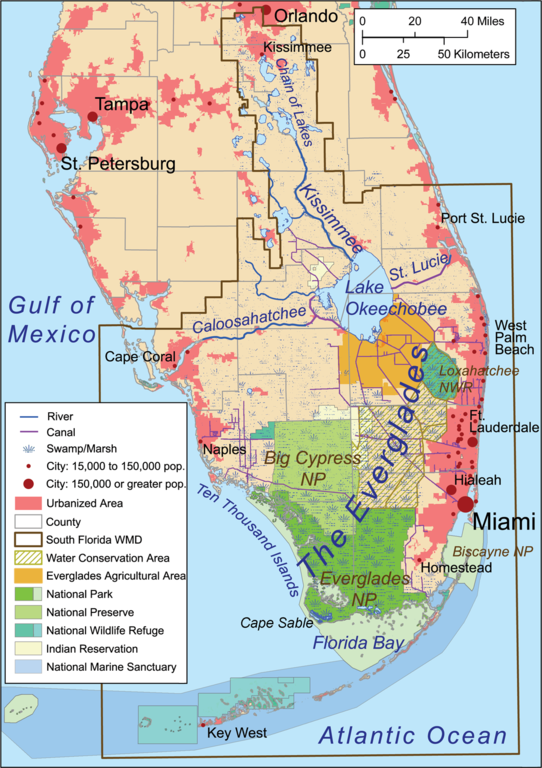
Army Corps Announcement Could Bode Well for Endangered Everglades Species by Virginia Chamlee


The Army Corps of Engineers on Wednesday approved a South Florida Water Management District request for authorization to use temporary forward pumps to pull water from Lake Okeechobee lower than gravity-flow will allow, and now, the Corps has agreed to reduce that permit extension to one year only, in part to allow for a thorough analysis of the impacts of the pumps on the endangered Everglades snail kite. The announcement is an important one for the environmental group Audubon of Florida, which has long fought for the snail kite habitat.

The health of the snail kite is known to be indicative of the overall health of the Everglades system. Because the species’ diet consists almost solely of apple snails, the survival of the snail kite depends directly on the hydrology and water quality of the watersheds near which they live. Water conservation measures are imperative in order to comprehensively protect not only the kite habitat, but the greater Everglades ecosystem as a whole.


According to the National Park Service, the range of the Florida population of snail kites is restricted to watersheds in the central and southern part of the state. The species was listed as endangered in 1967.


“With three severe droughts hitting Lake Okeechobee in less than a decade, it is crucial for state and federal agencies to look closely at impacts of low water levels on the Everglade Snail Kite,” Everglades Policy Associate Jane Graham said in a press release sent out Thursday afternoon. “The Corps’ decision to renew the permit pending an evaluation of the impact of forward pumps on Lake ecology is an encouraging step in the right direction.”

Audubon of Florida Executive Director Eric Draper said that regulatory agencies (like the South Florida Water Management District) need to “rethink how water from Lake Okeechobee is being used throughout the year to put the environment on par with the sugar industry and other users.”

Sunday, January 22, 2012

Federal regulators designated nearly 42,000 square miles of ocean along the West Coast as critical habitat for the Pacific leatherback turtle Friday, far less than originally proposed but still the largest protected area ever established in American waters.

The protected area is the first permanent safe haven in the waters of the continental United States for endangered leatherbacks, which swim 6,000 miles every year to eat jellyfish outside the Golden Gate.


The designation, by the National Oceanographic and Atmospheric Administration, was a bittersweet victory for environmentalists, who have been fighting to protect the marine reptiles from extinction.


The 41,914 square miles that the NOAA's National Marine Fisheries Service protected along the coasts of California, Oregon and Washington did not include the migration routes the turtles take to get to the feeding grounds. That means 28,686 square miles of habitat originally proposed for the designation was left unprotected.


"It's a big step in the right direction, but we want protections for migratory pathways," said Ben Enticknap, the Pacific project manager for Oceana, an international nonprofit dedicated to protecting the world's oceans. "I guess we've got a lot more work to do to get there."


Wednesday, January 18, 2012

Irrawaddy Dolphins, Orcaella brevirostris

Description & Behavior

Irrawaddy dolphins, Orcaella brevirostris (Owen in Gray, 1866), aka Mekong or Mahakam River dolphin, reach 2-2.75 external m in length. The color of Irrawaddy dolphins is dark blue to dark gray ranging to pale gray, with a pale ventral (under) side. They have a high rounded forehead and no beak. Their U-shaped blowhole is located to the left of the midline on their dorsal (upper) side and opens to the front, unlike other species. They have a small, blunt, rounded triangular dorsal fin and large flippers. Like other river dolphins their neck is highly flexible, which enables them to forage in shallow water. They have narrow, pointed, peg-like teeth about 1 cm in length in both their upper and lower jaws. Two unique anatomical features of Irrawaddy dolphins are that they do not have a cardiac sphincter external and the stomach is subdivided into compartments. They are not acrobatic dolphins and are not known to bowride external; however they have been observed leaping from the water.
Irrawaddy dolphins dive for an average of 30-60 seconds but longer dives have been recorded of up to 12 minutes. Although they are generally slow swimmers, a swim rate of 25 external kph was recorded for one individual. This species is usually seen in small groups consisting of <6 animals, but groups of between 10-15 have been reported. This species spends most of their time feeding. They display a unique behavior of expelling a stream of water up to 1.5 external m which is thought to be used to herd fish. Fishermen have reported Irrawaddy river dolphins stunning large fish then playing with them before they eat them.

Irrawaddy dolphins are not thought to communicate through vocal signals.

World Range & Habitat

Irrawaddy dolphins, Orcaella brevirostris, are found in the coastal waters and large rivers of Southeast Asia, Northern Australia, and Papua New Guinea. They prefer coastal, brackish, and fresh water of the tropical and sub-tropical Indo-Pacific.

Feeding Behavior (Ecology)

Irrawaddy dolphins, Orcaella brevirostris, feed on fishes, crustaceans, cephalopods, and fish eggs. Two species of cyprinid fish external, Cirrihinus siamensis and Paralaubuca typus, are thought to be important food sources for Irrawaddy dolphins found in northeastern Cambodia and Laos. Carp is the primary species consumed in other areas.

Life History

Little is known about the reproductive habits of Irrawaddy dolphins. It is thought that they reach sexual maturity when they are around 4-6 years old. Their mating season is believed to occur between April-June in the Semayang Lake/Mahakam River area of Kalimantan, Indonesia, based on the birth of calves born in captivity in Jakarta between July-December. Their gestation period is estimated at about 14 months. Newborns measured following birth in captivity were 96 external cm long and weighed 12.3 external kg. During their first 7 months, calves increased in length by 57 external cm (59%) and in weight by 32.7 external kg (266%). One calf was nursed for about 2 years, although it began consuming fish at 6 months.